By: Jordan Meadows
Staff Writer
Long before the Boy Scouts of America became a nationwide institution, Black communities were already working to bring the ideals of scouting to their youth. In the early twentieth century, African American leaders and volunteers organized some of the first Black Boy Scout troops in the country, helping open opportunities for young people who were frequently excluded from mainstream civic organizations.
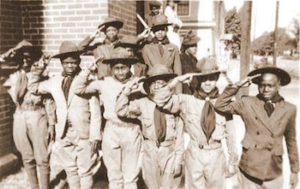 Historians say identifying the first Boy Scout troop in the United States is difficult because many early troops formed before the national organization was officially established in 1910. Determining the first Black troop is even more challenging. Outreach to African Americans, Native Americans, Latinos and other minority groups was limited in scouting’s earliest years, and records documenting those troops were often poorly preserved.
Still, one early unit frequently cited as among the first was founded in Elizabeth City, North Carolina, in 1911, just one year after the creation of the Boy Scouts of America.
The Elizabeth City troop encountered opposition almost immediately, but it continued meeting and became an important early example of African American participation in the movement. Similar efforts soon emerged in other communities. In 1916, the first council-sponsored Black troop in the South was organized in Louisville, Kentucky. Within a year, four officially recognized Black troops were operating in that city.
Despite these early developments, scouting opportunities for Black youth remained limited for many years. Because the national organization often allowed local councils to set their own policies, many communities refused to admit Black scouts or created separate troops with fewer resources. Some units allowed African American boys to participate but prohibited them from wearing official uniforms or imposed waiting periods before they could join.
Even outside the South, Black Boy Scouts sometimes faced hostility and violence. An account published in the newspaper The Denver Star in October 1913 described how a gang of white youths attacked a group of 75 Black scouts marching in their New York City neighborhood while accompanied by their own fife-and-drum corps. The scouts reportedly defended themselves until the attackers dispersed. In another incident reported by The Evening Star in 1924, men dressed in hoods and robes burned a cross to intimidate a Black troop camping near Philadelphia.
Despite those challenges, the number of Black troops gradually increased. A 1927 report in the Chicago newspaper estimated there were roughly 600 Black Boy Scout troops across the United States, though only 18 of them were located in the South. By 1926 there were at least 248 all-Black troops with nearly 5,000 scouts nationwide, and the number continued to grow in the following decades.
Some of that expansion came from efforts within the national organization to extend scouting to minority communities. Leaders such as Stanley Harris, a white scouting official who later directed the Boy Scouts’ Interracial Service program, worked to promote scouting among African American and Native American youth beginning in the 1920s. Community leaders and volunteers also played a crucial role. In Mansfield, Ohio, for example, black Sunday school teacher Thompson Jackson helped establish Troop No. 7 in 1925 after organizing a group of boys in his church class. Twenty scouts from the troop received their first badges during a ceremony that year.
While the Elizabeth City troop is often recognized as one of the earliest Black Boy Scout units, other troops have also claimed that distinction. An article in the March 1936 issue of Scouting magazine noted that Troop 55 of Brooklyn, New York, believed it was the first African American troop in the country.
As more troops formed, scouting leaders slowly expanded outreach to Black communities. Councils began hiring Black field executives, developing camps specifically for Black troops and encouraging participation in national events. At the 1937 National Jamboree, African American troops from across the country attended, and Black adult leaders participated in national training programs for the first time.
By the end of World War II, the movement had grown significantly. By 1945, more than 3,500 Black Boy Scout troops and nearly 800 Cub Scout packs were operating across the United States. Still, many troops remained segregated for decades. Integration within scouting councils occurred gradually, particularly in the South. In North Carolina, the Old Hickory Council—one of the last segregated Boy Scout councils—did not fully integrate its troops until 1974.
