
 By Jheri Hardaway
Staff Writer
Dunn, NC — Saturday, October 17th, gathering under the resolute theme “Standing on the Shoulders of Freedom: Advancing Civil Rights in Critical Times,” the Harnett County Branch of the NAACP (Branch 5473-B) hosted its 56th Annual Freedom Fund Banquet at the Dunn Community Building. The evening blended commemoration with a clarion call to community action, bringing together local civil rights champions, clergy, educators, elected leaders, and candidates just days after the launch of North Carolina’s early voting period.
Welcoming attendees to what she affirmed was “not just an occasion, but a movement,” branch President Benita Harrington framed the gathering as both an obligation to history and an urgent test of unity. “We stand here tonight because somebody stood before us, somebody marched when their feet were tired, somebody prayed when hope seemed distant, and somebody endured jail cells, hatred, humiliation, and even death so that our generation could stand,” attendees were reminded. “Leadership is about accountability. Leadership is about having the courage to stand for what is right, even when you stand alone.”
Area clergy leaders pressed the room to turn faith into civic power at the ballot box: “Early voting kicked off on Thursday. Please go vote, vote, vote. We have to do it together to see the change that we want to see.” Following an invocation and introduction by Reverend K. Swann, who humorously reminded the room of his pastor's rule that “if you don't vote, you don't eat,” the podium was turned over to civil rights attorney, author, political commentator, and former South Carolina State Representative Bakari Sellers.
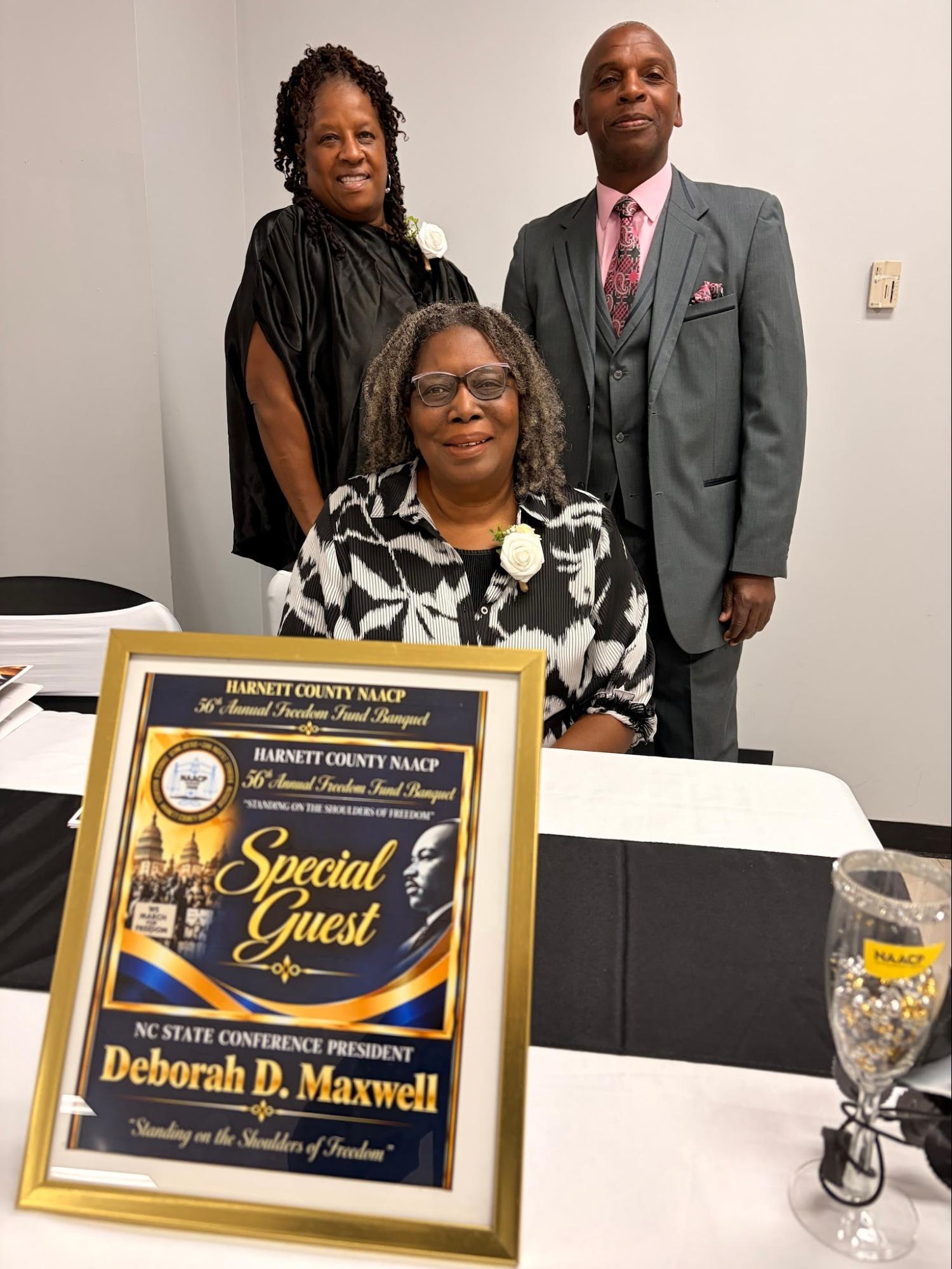
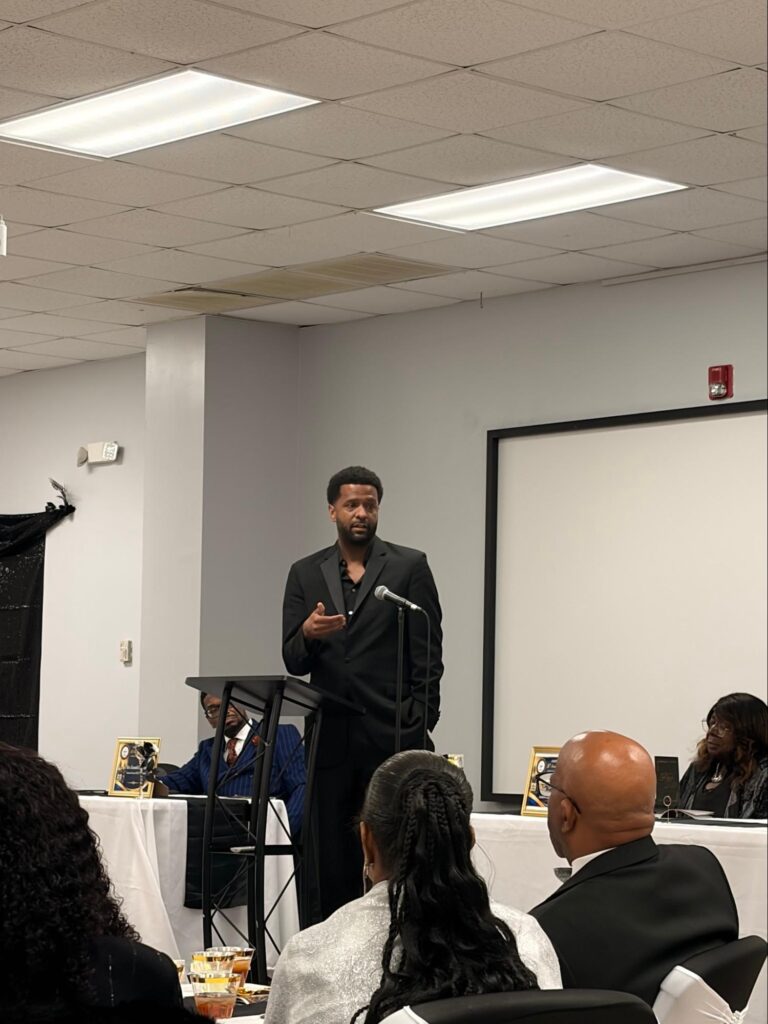
Sellers opened his keynote by expressing gratitude and paying tribute to branch president Mrs. Harrington and North Carolina state NAACP President Deborah Dicks Maxwell, acknowledging the relentless demand placed on those leading local branches and grassroots movements. Pointing to public servants and candidates in the room, Sellers recognized the courage required to be intentional on a Saturday night in an era when public expectations are high and civil discourse is fractured. Turning to history, Sellers set aside conventional, docile depictions of the civil rights movement, choosing instead to strip away historical revisions and focus on what Dr. Martin Luther King Jr. termed the “fierce urgency of now.” “Introspective moments only require two really simple questions,” Sellers told the audience. “The first question you ask yourself is: How far have we come? And the next question is: Where do we go from here?”
To measure that distance, Sellers guided the audience through landmark, often overlooked milestones of Southern resistance and sacrifice. First, in 1948, George Elmore challenged South Carolina’s all-white primary system in Elmore v. Rice. While the lawsuit successfully secured African Americans the right to vote in primaries, Elmore paid an unimaginable price, his businesses were boycotted and firebombed, his family was driven into tragedy, and he died broken. “If it wasn't so damn important, they wouldn't work so hard to take it from us,” Sellers reminded the crowd, connecting Elmore's sacrifice directly to modern voter suppression efforts.
Next he spoke on Sarah Mae Fleming. Eighteen months before Rosa Parks took her stand in Montgomery, 22-year-old domestic worker Sarah Mae Fleming was brutally struck by a bus driver for attempting to exit through the front door of a segregated bus. Fleming worked with NAACP attorneys to strike down segregated seating on municipal buses. Like the prophet Isaiah saying “Here am I, Lord, send me,” Fleming showed how everyday working-class people become the cornerstone of historic change.
The final contextual example was of Harry and Eliza Briggs. In Clarendon County, South Carolina, the Briggs family sought nothing more radical than a school bus so their children would not have to walk miles to substandard facilities while white students rode by. Their lawsuit became Briggs v. Elliott, the primary building block of the landmark 1954 Brown v. Board of Education Supreme Court decision.
Sellers noted that while tangible progress has been made, true equality remains unfulfilled when rural communities still suffer from neglected public transit, substandard infrastructure, contaminated drinking water, and schools ill-equipped for a 21st-century global economy. “The answer to the question, how far have we come? is that we’ve made a great deal of progress,” Sellers said. “The rub comes because there are a lot of people who want to put a period at the end of that sentence, when it should be a dot, dot, dot. We’ve made progress, but we still have a ways to go.”
Addressing the much harder question of where do we go from here, Sellers shared personal history, recounting the legacy of his father, civil rights activist Dr. Cleveland Sellers. A leader within the Student Nonviolent Coordinating Committee (SNCC), the elder Sellers organized voter registration drives during Freedom Summer and survived the 1968 Orangeburg Massacre at South Carolina State University, where state troopers fired into a crowd of unarmed students, killing three young men—Henry Smith, Samuel Hammond, and Delano Middleton—and wounding 28 others. Cleveland Sellers was falsely branded an "outside agitator" and convicted of rioting, becoming the nation’s only one-man riot conviction. Sellers explained that enduring these generational struggles requires answering the future with three core commitments:
Dream With Your Eyes Open: Moving beyond passive wishful thinking to actively rebuild ambition and cultivate Black excellence in government, law, education, and industry.
Love Your Neighbor Even When They Don't Love You: Practicing an unconditional, radical love that refuses to let bitterness dictate community action or public engagement.
Extend Grace to One Another and Ourselves: Acknowledging the heavy generational trauma carried by young people who have lived through continuous economic crashes, systemic violence, a global pandemic, and digital polarization, and providing them the grace and mental space to heal and lead.
“The funny part about this journey that we're on together is that we probably won't be famous, our names probably won't be in lights, and we probably won't be rich,” Sellers concluded. “But at the end of our journey, as we sit in this bastion of urgency, think about Henry Smith, Samuel Hammond, and Delano Middleton. Maybe they will simply look down and say: Job well done.”
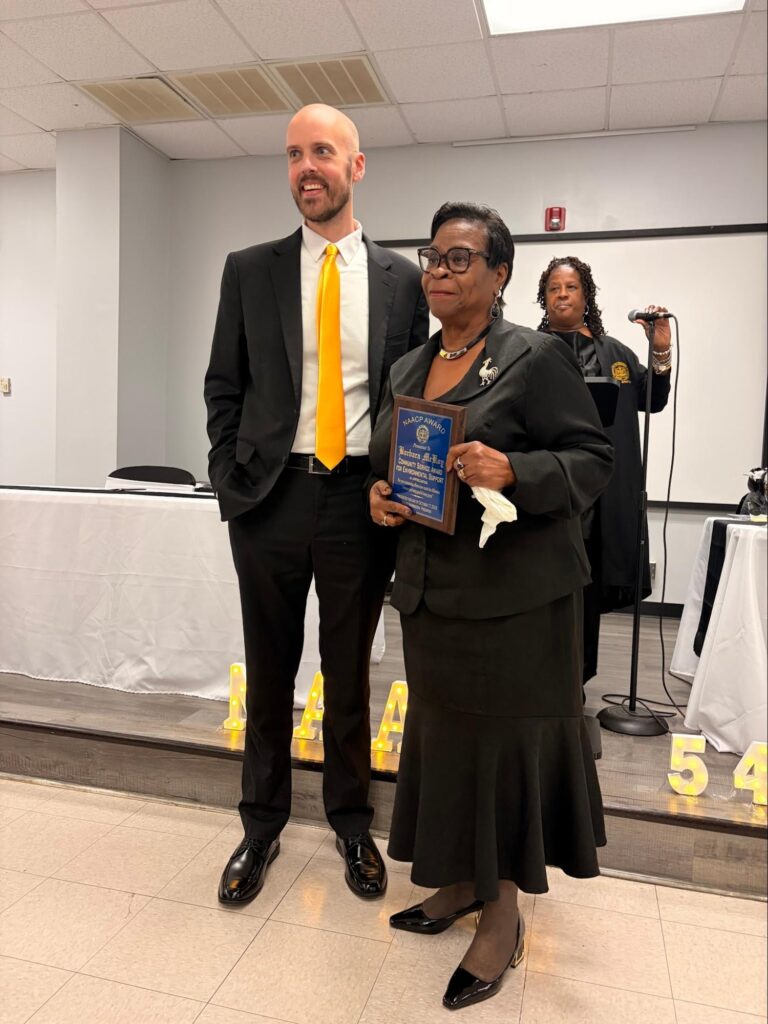
A centerpiece of the evening’s celebration was the presentation of community awards honoring the local leaders, institutions, and grassroots pioneers working tirelessly across Harnett County. Branch 5473-B presented the Outstanding Church Award to Davis Chapel A.M.E. Zion Church for its faithful spiritual foundation and service, while Purpose Pushers Life Academy was recognized with the Activism Award for dynamic community impact. Reflecting the branch’s commitment to uplifting the next generation, Jayden Bates was celebrated as the Youth Trailblazer Award recipient, alongside recognition for Community Youth Leadership. In recognition of civic and public welfare advocacy, Commissioner Barbara McKoy received the Community Services for Environmental Support Award. In one of the most moving moments of the night, the banquet paid tribute to living history by honoring centenarian Isabell Phillips with the Century Circle Award (100 Yrs+), a stirring embodiment of the evening's theme of standing on the resilient shoulders of those who paved the way.
A renewed energy circulated as attendees pledged to support Branch 5473-B's ongoing civil rights initiatives, community outreach, and voter mobilization drives throughout Harnett County.
