
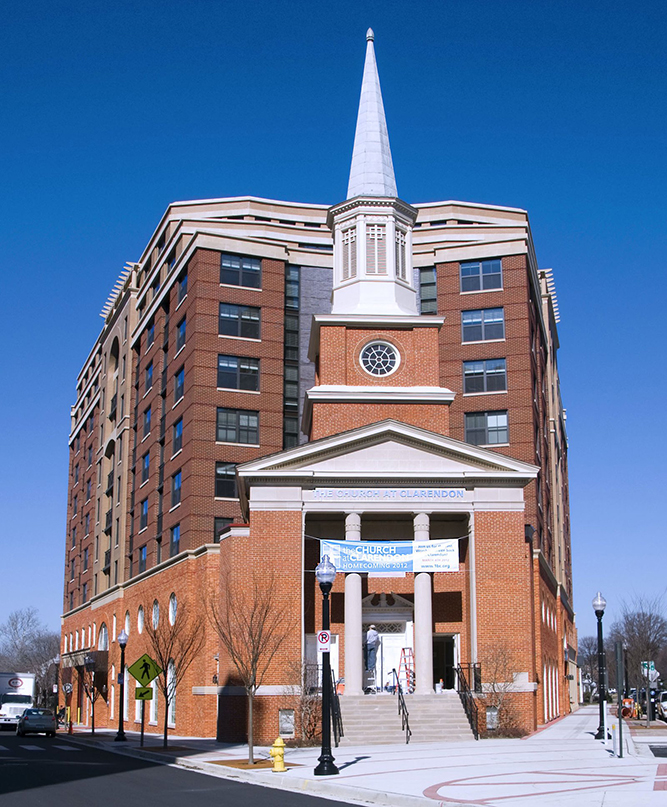
 Across America, affordable housing has become more than an economic issue. It is a community stability issue. Families are struggling to keep up with rising rents, home prices and utility costs, while seniors, veterans, working families and young adults increasingly find themselves priced out of neighborhoods they once called home.
In the middle of this crisis sits an institution with a unique combination of resources, relationships and community trust: the church.
For generations, churches have responded to the needs of their communities. They have operated food pantries, clothing closets, shelters, scholarship programs and emergency assistance ministries. Affordable housing represents another opportunity for the church to extend that mission — not simply by providing temporary assistance, but by helping create long-term stability.
One of the church’s greatest assets is land.
Many congregations own property that may include vacant lots, unused buildings, parking areas or facilities that are underutilized during much of the week. In communities where land costs make affordable housing development difficult, church-owned property could potentially become part of the solution.
A church does not have to become a traditional housing developer to make a difference. It can partner with nonprofit housing organizations, developers, local governments, community development financial institutions and housing authorities. Through partnerships, church property could potentially be used for affordable apartments, senior housing, transitional housing, workforce housing or homeownership opportunities.
The church also has something that cannot easily be measured in acres or dollars: relationships.
Churches know the people in their communities. Pastors and congregational leaders often encounter families facing eviction, seniors living on fixed incomes, single parents struggling with housing costs and young people who cannot afford to live where they grew up.
That proximity gives churches an important understanding of housing needs that may not appear in a government report.
Moving From Charity to Community Development
The traditional response to a housing crisis is often emergency assistance — helping someone pay a utility bill, rent or mortgage payment. Those efforts are important, but they address the immediate problem.
The larger opportunity is to address the underlying shortage of affordable housing.
Churches can become advocates for policies and investments that increase the supply of affordable homes. They can participate in community planning discussions, educate their congregations about housing issues and encourage residents to become involved in local decision-making.
They can also help change the conversation.
Affordable housing is sometimes discussed as though it benefits only people experiencing poverty. In reality, affordable housing affects teachers, nurses, police officers, firefighters, retail workers, childcare providers, veterans, seniors and young professionals.
A community cannot function when the people who work there cannot afford to live there.
Churches Can Help Build Wealth
Homeownership is another area where churches can make a meaningful difference.
For generations, owning a home has been one of the primary ways American families build and transfer wealth. Yet many families face barriers to homeownership, including down-payment requirements, credit challenges, high interest rates and a lack of financial knowledge.
Churches can partner with housing counselors and financial institutions to offer financial literacy programs, credit counseling, first-time homebuyer education and workshops on estate planning and generational wealth.
The goal should not simply be to help families find a place to live. It should be to help families build a foundation for financial stability.
A Special Opportunity for the Black Church
For the Black church, affordable housing carries an additional significance.
Historically, Black churches have been among the most important institutions in African American communities. They have helped establish schools, businesses, social organizations and civic movements. Today, housing can become another area where that institutional strength is put to work.
Black communities have experienced decades of discriminatory housing practices, including redlining, segregation and unequal access to mortgage credit. The effects of those policies continue to influence homeownership, neighborhood investment and generational wealth.
The church cannot reverse that history by itself. But it can help address some of its continuing consequences.
A congregation that develops affordable housing, supports homeownership education or helps preserve housing for seniors is doing more than providing shelter. It is helping preserve community.
Partnerships Are the Key
Perhaps the most important point is that churches do not have to do this alone.
A successful church-based housing initiative might involve a congregation providing land, a nonprofit providing development expertise, a local government providing incentives or financing, a bank providing construction or permanent financing and professional developers handling construction and management.
Such partnerships can turn a church’s existing assets into a community resource.
There are also federal, state and local programs designed to support affordable housing development. Churches and faith-based organizations willing to learn how these programs work can become valuable partners in bringing housing investments into their communities.
The Church’s Next Housing Ministry
The affordable housing crisis requires more than emergency assistance. It requires imagination, partnerships and a willingness to think about ministry in new ways.
The church has a unique position because it can bring together faith, land, relationships, volunteers, advocacy and community trust.
A church parking lot may be more than a parking lot. An unused building may be more than an empty building. A congregation may be more than a group of people who gather on Sunday.
Together, those assets can become part of a larger vision for community development.
The question is not whether every church should become a housing developer. It should not.
The question is whether churches should consider how their property, influence and relationships can help ensure that families, seniors, veterans and working people have a safe and affordable place to call home.
For a church committed to serving its community, affordable housing may be one of the most meaningful ministries it can undertake — because a stable home provides more than shelter.
It provides a foundation from which families can work, children can learn, seniors can age with dignity and communities can grow.
The church has always been called to serve the whole person. In today’s housing crisis, that mission may require opening not only the doors of the sanctuary, but also the doors to new possibilities for housing and community development.
