
By Jordan Meadows
Staff Writer
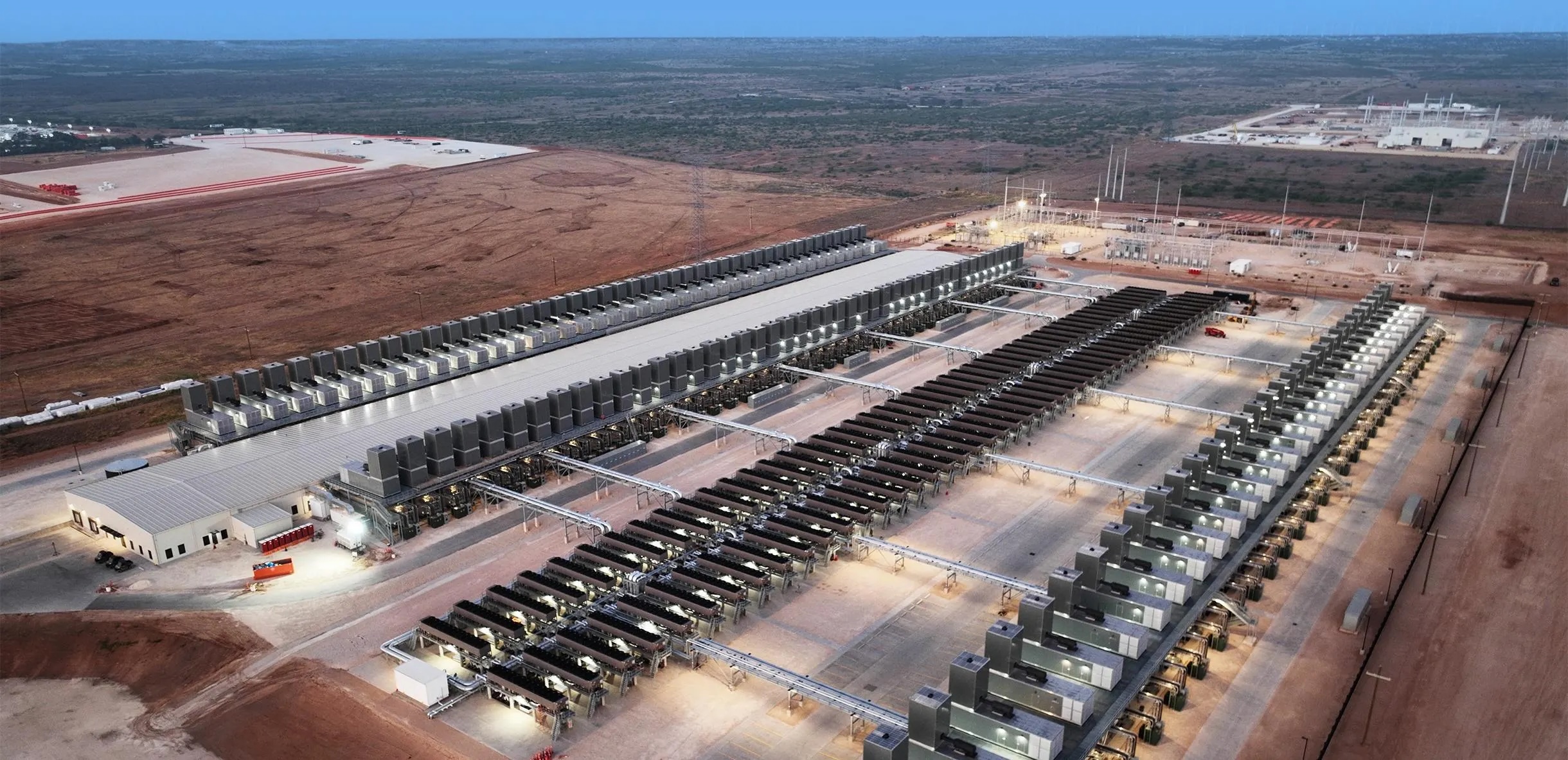
Southeast Raleigh residents and local candidates gathered Saturday at the Garner Woman's Club for a People's Assembly and candidate forum on proposed data center development in the region, with nearly every candidate in attendance backing some form of moratorium ahead of the Raleigh City Council's vote Tuesday evening.
The event combined a community organizing fair, panel discussion and candidate forum focused on what organizers described as the broader stakes of rapid data center expansion for land, water, energy, public health, utility infrastructure and local decision-making across Raleigh, Wake County and North Carolina more broadly. Candidates for Raleigh City Council, Wake County commissioner and the Wake Soil and Water Conservation District weighed in on how long a moratorium the city and county should pursue, with positions ranging from six months to a permanent ban.
Raleigh City Council member Christina Jones, who represents District E, said she supports a moratorium but cautioned that its length should be tied to how quickly the city can answer outstanding questions about data centers' energy and water usage.
"I definitely support a moratorium," Jones said. "What I'm concerned with is, if it's a six-month moratorium versus a 36-month one—if we don't address those questions and answer them, we're never going to get your buy-in. I want there to be public meetings, back-and-forth public conversation, and I think we need to use this time to justify that to the public."
Raleigh City Council member Cory Branch, who represents District C, urged the crowd to distinguish between the longstanding history of data centers and the newer hyperscale facilities driving current concerns.
"Data centers have been around for a very long time. They built this region," Branch said, pointing to companies such as IBM and Lenovo that have relied on data infrastructure for decades.
"Let's be more specific when we talk about what is really impacting our environment, and that's the hyperscale data centers that are causing more impact right now on the environment than the legacy data centers. This gives us time to go in, tighten up our procedures, tighten up our rules, so that we can make sure that everybody is safe in Raleigh as well as our surrounding communities."
Jevon Smith-Cook, a nonpartisan candidate for Raleigh City Council District D, framed his support for a moratorium around workforce disruption, particularly in surrounding rural communities.
"The disruption that we see now is not the disruption that we're going to see in the future… Just because we don't have a data center in the city of Raleigh doesn't mean we won't have one in Chatham County, because the land here is so expensive," he said.
Wake County Commissioner At-Large Mona Singh, who said she comes from a technology background, argued the county simply lacks the capacity to absorb large-scale data center development.
"We have 66 people moving into the county every single day. We do not have the resources even to provide for those 66 people," Singh said. "Each AI data center would use resources that could actually help be used for 100,000 people. We just don't have it. Data centers should be in places where they have resources and no people, and that's not Wake County."
Samantha Kropp, who works professionally in water quality as a riverkeeper on the Neuse River, backed the longest moratorium discussed at the forum.
"I do support a 36-month moratorium. I support as long of a moratorium as we can feasibly pass, in order to gain the necessary time that we need to get the unanswered questions answered," Kropp said, noting other parts of Wake County have already passed moratoriums longer than six months.
She also warned against loopholes that would allow a wave of smaller data centers to collectively match a hyperscale facility's impact.
"If we're ushering in, let's say, 10, 20, 30 more smaller data centers, then what we end up with is the equivalent of the emissions and discharges of a hyperscale data center," she said.
Cece Grant, another candidate for the conservation district, said she has spent three years fighting data center development and rejected any moratorium as insufficient.
"I am not for a 36-month ban. I'm for a permanent ban," Grant said.
She cited three reasons for her opposition: 1) that data centers are disproportionately sited in low-income communities, 2) that developers often negotiate favorable deals with utility companies that shift costs onto ratepayers, and 3) that the facilities consume water needed by residents while discharging runoff into the same water supply.
"We have enough problems paying Duke Energy. We don't need to be paying for a data center," she said.
Terence Thomas, also running for the conservation district, said a six-month window isn't enough time to build public trust.
"There are two issues here: public safety and public trust. Six months does not give us enough time to communicate to the community about the impact and the effect of what the data center can do. When there is not enough communication, there is distrust in the community."
Less than an hour East of Wake County, the Wilson NAACP hosted its own candidate forum the same day, at Wilson Community College's DelMastro Auditorium.
Wake County Commissioners Sherry Lucas and JoAnne Daniels, the only commissioner candidates in attendance, both spoke against a ballot referendum to cap personal and property taxes, the Wilson Times reported.
"If we don't have the revenue, we will not be able to do the things in the county that we would like to do," Lucas said.
With the election approaching, more counties and candidates are expected to hold forums and address the issues most affecting their communities.
