
By Jordan Meadows
Staff Writer
At a Tuesday evening meeting, the Durham Board of County Commissioners commemorated White Rock’s 160th anniversary with a resolution recognizing the church as a cornerstone of African American history in Durham. The resolution points to White Rock’s beginnings in 1866, its role in community development and its longstanding connections to education, health care, social justice, and other institutions that helped shape Black Durham.
For church members, the anniversary is being observed through a series of gatherings throughout the year, bringing together worship, music, fellowship and reflection on the congregation’s history.
White Rock’s story begins in the aftermath of the Civil War. In 1866, Margaret Ruffin Faucette and other members of Durham’s newly freed Black community began gathering for prayer and fellowship in homes and under brush arbors. Those informal gatherings eventually developed into a congregation that would become White Rock Baptist Church.
As Durham’s Black community grew, so did White Rock’s influence.
The church’s history includes the ministries of numerous pastors, including the Rev. Zuck Horton, the Rev. Samuel “Daddy” Hunt, the Rev. Miles Mark Fisher and others. During the 20th century, White Rock also developed programs intended to address some of the practical needs of the surrounding community.
In February 1960, Martin Luther King Jr. addressed a large crowd at the church, speaking at a time when student sit-ins were spreading across the South. King’s appearance came shortly after the Greensboro sit-ins and amid growing activism throughout North Carolina.
His speech at White Rock, known as “A Creative Protest,” became one of the most notable moments in the church’s history.
In 1967, White Rock’s historic church building in Durham’s Hayti community was demolished during construction connected to the Durham Freeway. The loss was part of a much broader transformation of Hayti, where highway construction and urban renewal displaced residents, businesses and institutions.
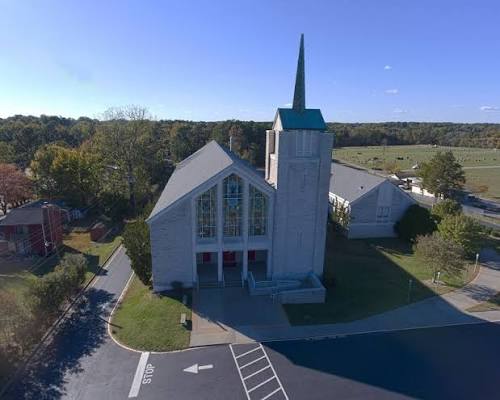
White Rock’s congregation remained together. Members eventually purchased land farther south, and the present sanctuary on Fayetteville Street opened in 1977.
Today, White Rock remains at 3400 Fayetteville St. under the leadership of the Rev. Dr. Reginald Van Stephens.
The church’s anniversary theme is “Planting in Faith, Growing in Grace, and Gathering the Harvest: Unity and Community.”
Deaconess Dr. Joyce Blackwell said the theme is intended to connect the church’s past with its present and future.
“As we look back, we remember those who planted the seeds of hope and faith that have grown into the vibrant community we are today. In addition, our evolution has been marked by grace, as we have navigated challenges and celebrated victories together,” she said. “Today, we find ourselves reaping the fruits of our labor, unity, and commitment to serving one another and uplifting our community.”
The anniversary calendar includes several special programs throughout the fall, including musical performances, worship services and other gatherings. The events bring together members of the congregation and guests from outside the church as White Rock marks the milestone. The celebration culminates with a series of major anniversary observances in October.
“As we celebrate this milestone, let us remember that we are more than a church; we are a family, united in our faith and commitment to one another,” Blackwell said.
