
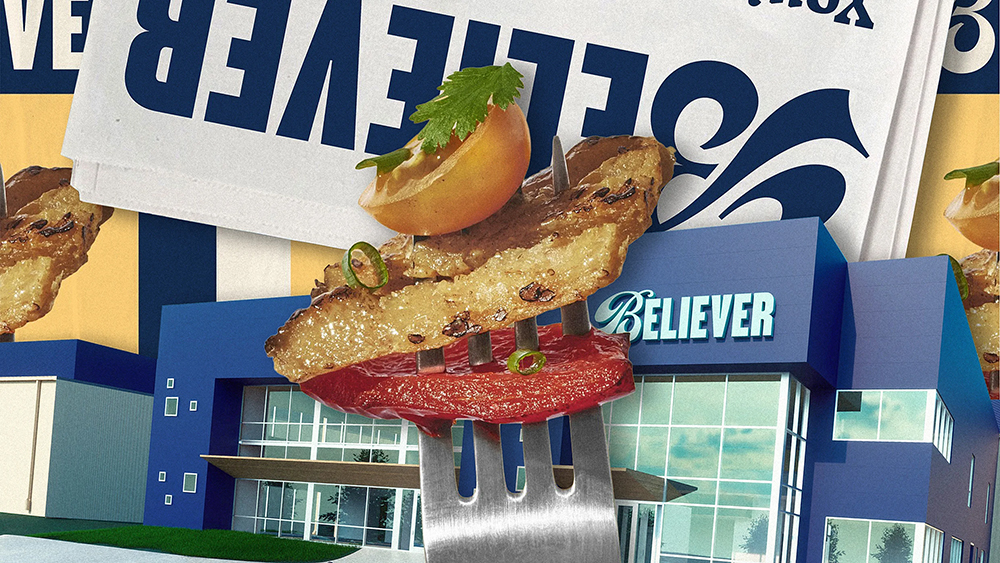
WILSON, N.C. — For a few months in 2025, Believer Meats appeared to have achieved what much of the cultivated-meat industry had been promising for years. The company had built a massive production facility in Wilson County. Federal regulators had cleared its cultivated chicken for commercial sale. Investors had poured hundreds of millions of dollars into the venture, which had relocated its ambitions from Israel to the United States. Then, within weeks of reaching those milestones, Believer shut down.
Believer Meats, formerly known as Future Meat Technologies, was founded in Israel and became one of the better-funded companies in the cultivated-meat industry. The company raised hundreds of millions of dollars from investors as it sought to commercialize meat grown from animal cells rather than slaughtered animals. The company's strategy increasingly centered on the United States.
In December 2022, Believer broke ground on its North Carolina facility. The Wilson County plant was designed as a major step beyond laboratory and pilot production, with roughly 200,000 square feet of space and production capacity measured in thousands of metric tons annually. The project represented a substantial economic bet on the region as well as on cultivated meat.
Believer eventually completed construction in 2025. Industry reports put the facility's cost at roughly $150 million or more. The company appeared to be approaching the moment when years of research and investment would turn into commercial production. Instead, the financial strain that had accumulated during construction became decisive.
The company's collapse has become one of the starkest examples of the gap between proving that cultivated meat can be produced and building a business capable of producing it profitably at industrial scale. Believer's North Carolina factory, built at a reported cost of more than $150 million, is now caught in a court-supervised sale process, while the company's intellectual property is being handled separately in Israel.
The story is one of technological ambition, regulatory progress and heavy investment — followed by a shortage of cash, unpaid construction bills and insolvency proceedings.
Prior to its collapse, Believer reached two major regulatory milestones in 2025. In July, the Food and Drug Administration issued the company a "no questions" letter concerning its cultivated chicken, clearing a major hurdle in the federal review process. In the fall, the company received U.S. Department of Agriculture approval that allowed it to proceed toward commercial sales.
The company also announced that construction of its North Carolina facility had been completed. The sequence was remarkable: a finished large-scale plant, federal regulatory clearance and a product that could legally move toward the U.S. market. But regulatory approval did not solve the company's more immediate problem which was how to finance the final stage of commercialization.
Behind the scenes, Believer was struggling with its obligations to the companies that had built and equipped the Wilson facility. Gray Construction, the project's design-build contractor, later sued Believer, alleging that the company had failed to pay tens of millions of dollars.
According to the lawsuit, the parties entered into a forbearance agreement in October 2025 under which Believer agreed to pay Gray $22 million by Dec. 5, with additional payments to follow. Believer did not make the first payment, according to Gray.
The missed payment turned a construction dispute into a much larger threat to the company's survival. Gray alleged that Believer had breached the agreement and sought to enforce its rights against the company's assets.
Around the same time, Believer began cutting its workforce.
By December, the company had stopped operations altogether.
Believer's shutdown was announced publicly by its global head of human resources, who described the decision as the end of a two-year effort to build something ambitious. Industry publications reported that employees at the North Carolina plant and in the executive ranks had been laid off.
The timing was especially jarring.
Believer had spent years developing its technology and more than $100 million building a factory. It had just crossed the regulatory barriers required to sell its product. Yet it never became a commercial-scale cultivated-meat producer.
