
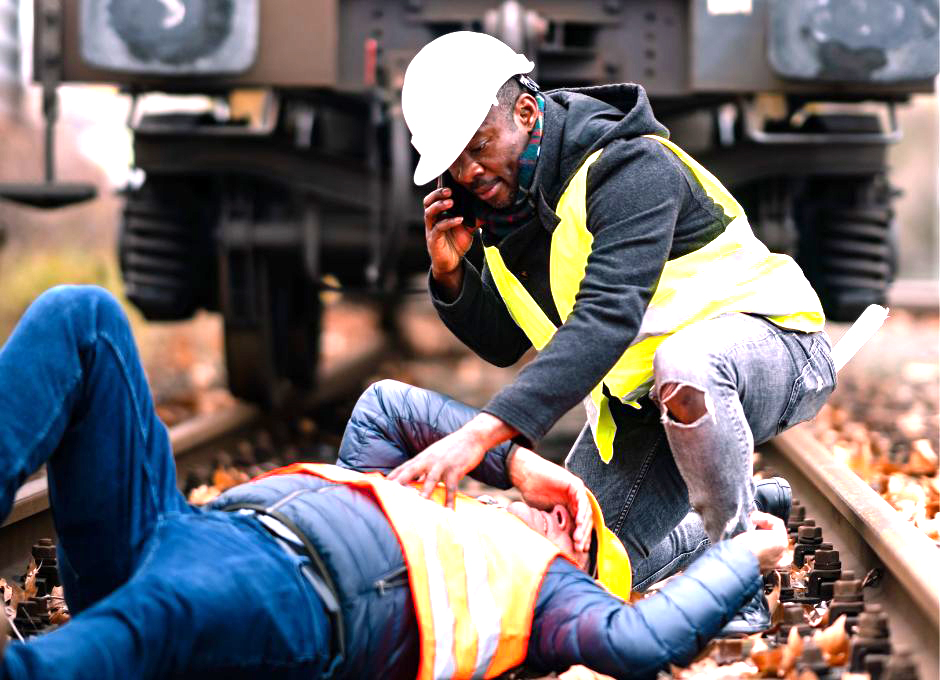
For thousands of North Carolinians, going to work each morning means stepping into environments where a momentary mistake, equipment failure or unsafe condition can have life-changing consequences. Sometimes, the consequence is death.
That reality came into sharp focus this week in Apex, where a person died in what authorities described as an apparent construction accident at a work site on Humie Olive Road.
The circumstances surrounding the Apex death remain under investigation. But the incident raises a larger question for North Carolina: How safe are the state’s workplaces, and what happens to workers and their families when safety fails?
The latest federal statistics show that workplace fatalities remain a significant problem in North Carolina. According to the U.S. Bureau of Labor Statistics, 196 fatal work injuries were recorded in North Carolina in 2024, up from 177 in 2023. That represented a 10.7% increase in the number of fatal workplace injuries.
The numbers are not simply statistics. Each represents a worker who did not return home and a family forced to deal with the economic and emotional consequences of a workplace death.
Construction is particularly important when discussing workplace safety because workers can be exposed to falls, heavy equipment, electrical hazards, collapsing structures, trenches, vehicles and other potentially deadly hazards.
Though we discuss workplace fatalities in terms of statistics, investigations and OSHA violations, the consequences are much more personal. A worker’s death can eliminate a family’s primary source of income while leaving behind a spouse, children or other dependents.
When a worker dies, government agencies investigate what happened. OSHA may investigate a workplace covered by federal or state occupational-safety requirements. Law enforcement may investigate whether a crime occurred. Employers may conduct their own investigations.
Those investigations are important, but the more important question is whether the accident could have been prevented in the first place. An equally important questions is, was someone pressured to choose between getting the job done quickly and doing the job safely?
Those of you who follow our digital channel are aware of the concerns that were sent to us about the $2 billion Johnson & Johnson construction build in Wilson, North Carolina. The Carolinian received photos, written correspondence about the potential dangers of unaddressed safety violations and remarks about retaliatory actions on the site.
In a copy of the email correspondence that we received, a former safety contractor on that job site wrote about, “hundreds of gallons of Class 2 and Class 4 flammables stored inside the building…” He felt so strongly about the potential for injury that he emailed the global safety department for the company and drove all the way to Washington DC to hand delivery his report to the Department of Labor.
The Carolinian has called the North Carolina Department of Labor and the local OSHA division to get an update on these safety violation allegations. At the time of publication we had not yet received that update.
Workplace accidents also carry an enormous economic cost. For employers, an accident can mean medical expenses, workers’ compensation claims, equipment damage, lost productivity, regulatory penalties and increased insurance costs.
For families, the financial impact can be devastating. No compensation system can replace a parent, or a spouse, or a child.
The death at the Apex construction site is still being investigated, and it would be premature to assign blame before investigators determine what happened. But the incident is a reminder that workplace safety cannot be treated as paperwork or a box to check.
