
By Jordan Meadows
Staff Writer
The first of August marked the anniversary of the day a 23-year-old Women's Army Corps private named Sarah Keys refused to give up her bus seat to a white Marine in Roanoke Rapids, predating Rosa Parks' famous refusal in Montgomery by more than three years.
The town of Roanoke Rapids has marked the date as Sarah Keys Evans Day since 2020.
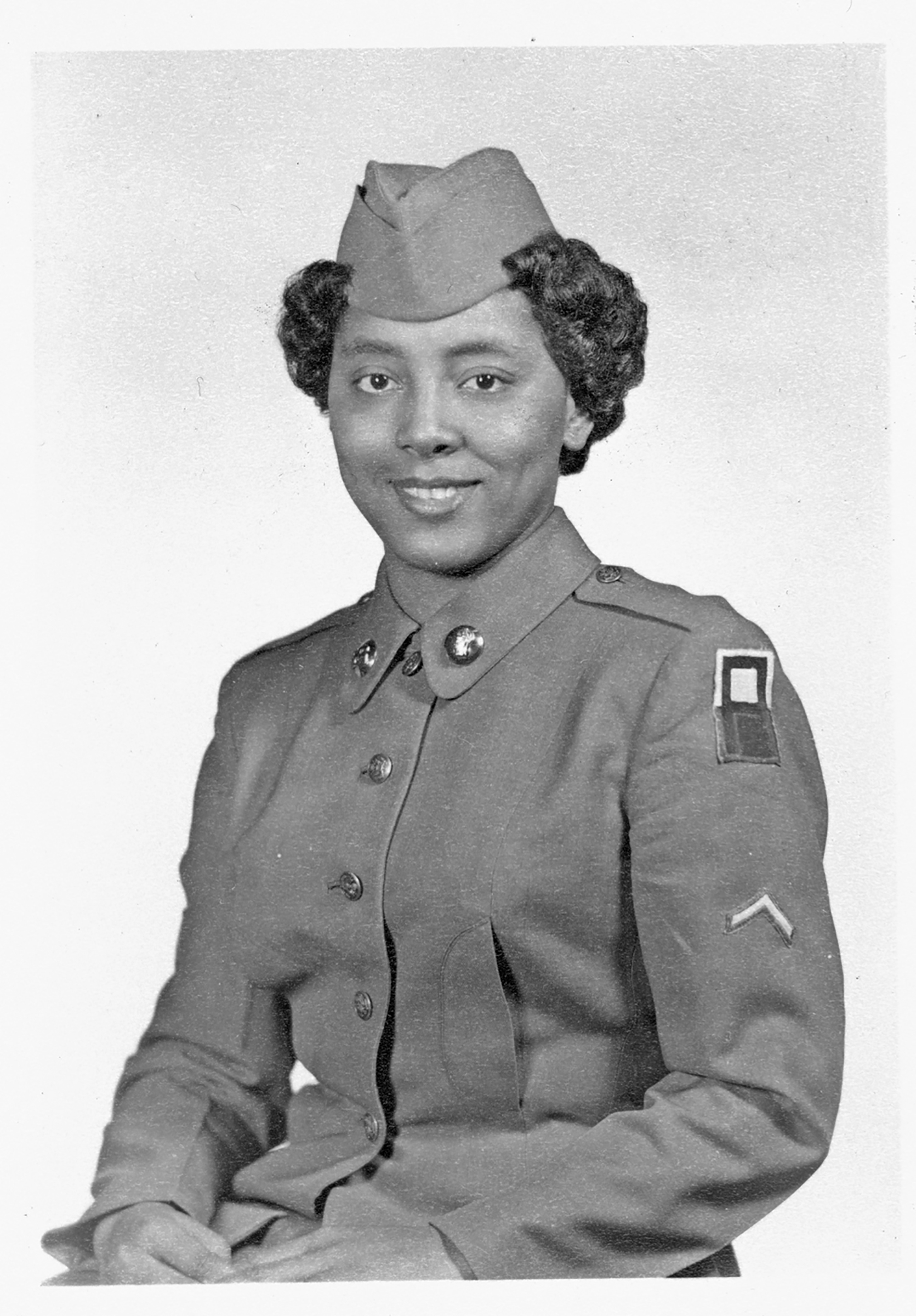
Women's Memorial Foundation Register Photograph
Keys, a Washington, NC, native serving as a private first class at Fort Dix, New Jersey, boarded a Trailways bus in Trenton on Aug. 1, 1952, headed home on leave to see her family. Because the bus traveled straight through with no transfers, she knew she was entitled to sit where she liked and chose a seat in the middle of the bus, away from the heat, bumps and engine fumes that tended to collect toward the back.
Near midnight, the bus stopped in Roanoke Rapids for a driver change. The new driver rechecked tickets as he moved down the aisle, and when he reached Keys, he ordered her to move to the back to make room for a white Marine who had just boarded. She refused.
The driver walked to the front of the bus and announced that every passenger except Keys would be transferring to a different bus. Police soon arrived at the terminal, took her by her arm and drove her to the station, telling her they would notify her family themselves; they never did, and her parents spent hours not knowing what had happened to their daughter.
Keys was held alone in a jail cell for roughly 13 hours and fined $25 on a charge of disorderly conduct.
Her father encouraged her to fight the charge rather than let the incident go, and the family brought the case to the NAACP, which connected Keys with attorney Dovey Johnson Roundtree—herself a former Women's Army Corps member who had faced a similar ordeal in 1943—and Roundtree's law partner, Julius Winfield Robertson. Roundtree and Robertson sued both Carolina Coach Company and the northern bus line that had originally sold Keys her ticket, taking the case to the Interstate Commerce Commission rather than the courts.
The fight lasted more than three years. On Nov. 7, 1955, the ICC ruled in Keys' favor, finding that seating Black interstate passengers in separate sections of a bus "subjects such passengers to unjust discrimination, and undue and unreasonable prejudice and disadvantage" in violation of the Interstate Commerce Act.
The commission issued a companion ruling the same day in a related railroad segregation case brought by the NAACP. Applying reasoning similar to the U.S. Supreme Court's 1954 decision in Brown v. Board of Education, the ICC decisions dismantled the "separate but equal" doctrine as it applied to interstate travel, rejecting the legal logic the bus company had relied on from Plessy v. Ferguson.
Weeks after the ruling, Rosa Parks was arrested in Montgomery, Alabama, for refusing to give up her own bus seat, an act that ignited the Montgomery Bus Boycott and drew national attention Keys' case never received.
Keys left the Army in 1953, moved to Brooklyn, married, and built a three-decade career as a hairstylist, eventually owning her own salon, Glamour Nook Ltd. Legal historians say the significance of her case has only been more widely recognized in recent years; in a May 1961 petition urging the ICC to enforce desegregation in interstate travel amid violence against the Freedom Riders, U.S. Attorney General Robert Kennedy cited both Keys v. Carolina Coach Co. and the Supreme Court's 1960 ruling in Boynton v. Virginia, which had already ended segregation in bus terminals.
Keys Evans died Nov. 16, 2023, at 94. Her story is the subject of "Riding Into History: The Surprising Story of Sarah Keys Evans and the Fight to Desegregate Bus Travel," published by Duke University Press, as well as an earlier young-readers book, "Take a Seat—Make a Stand," by Amy Nathan.
