
By Jordan Meadows
Staff Writer
Nine people were shot and at least 29 arrests were made after an estimated 8,000 teenagers gathered across two Raleigh locations over the Fourth of July weekend in what police described as large, social media-organized “teen takeovers,” prompting renewed scrutiny of juvenile laws.
The incidents unfolded late Saturday night into early Sunday morning, on the Fourth and fifth of July, beginning at Brier Creek Commons and continuing into the Glenwood South entertainment district and a nearby gas station on Capital Boulevard.
Raleigh police said approximately 3,000 teens initially gathered at Brier Creek around 10:30 p.m., where a disturbance began near a movie theater and surrounding stores. After officers removed teens from inside businesses, a large fight broke out outside, followed by gunfire. Two innocent bystanders were injured during the Brier Creek shooting — one struck by a bullet and another injured by shattered glass.
Officers detained a juvenile found in possession of a handgun, though investigators do not believe that individual was responsible for the shooting. The suspects remain at large.
After police cleared the area, the crowd reassembled in Glenwood South, where an estimated 5,000-8,000 teenagers gathered.
Beginning around 1:30 a.m., multiple shootings occurred across the district over a roughly two-hour span, including incidents on Glenwood Avenue, Tucker Street and Lane Street, leaving six people injured. A separate shooting around 4:28 a.m. at a gas station on Capital Boulevard left two additional victims wounded. Police said none of the injuries were life-threatening.
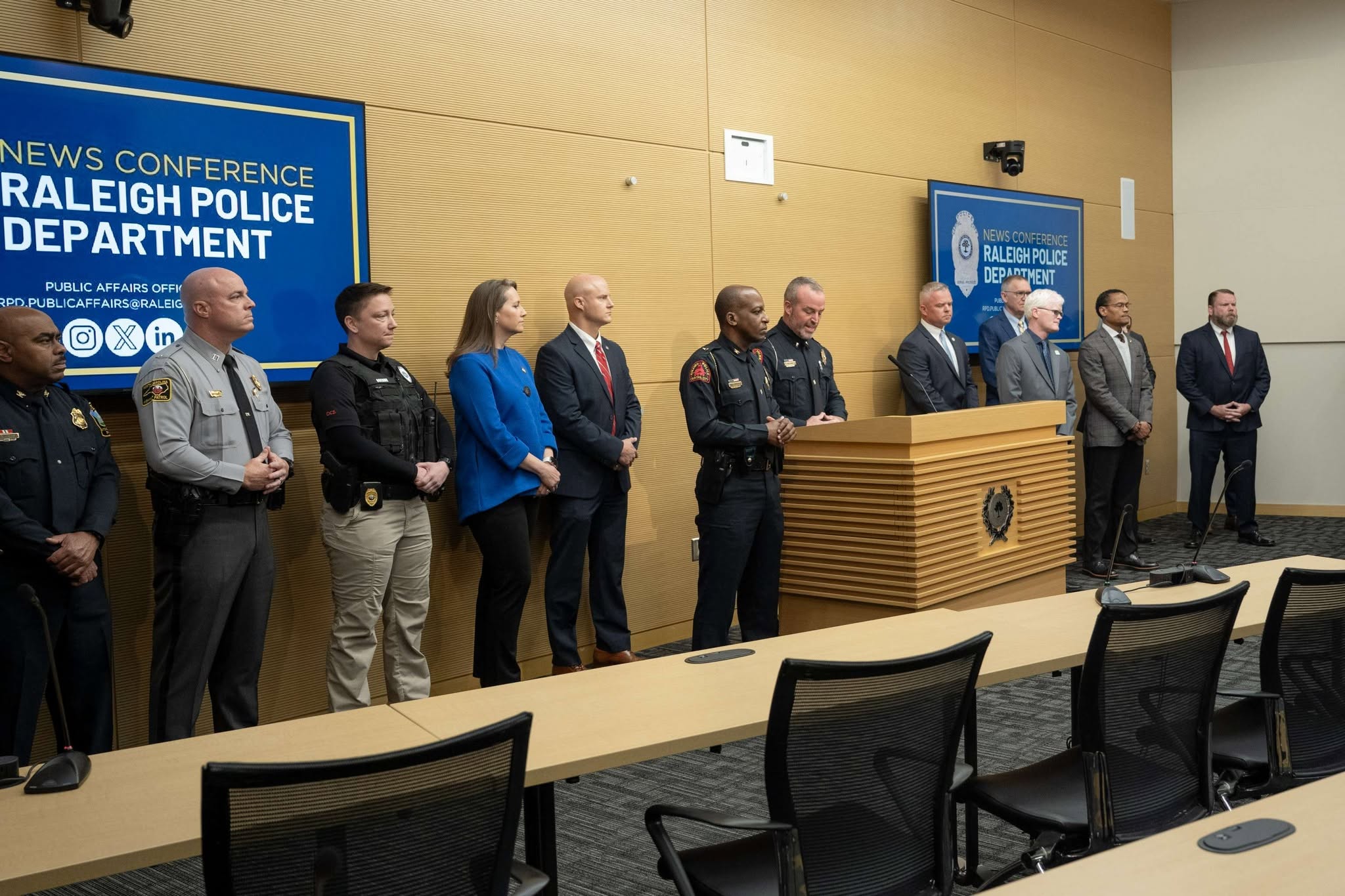
Raleigh Police Chief Rico Boyce described the scale and intensity of the events at a Raleigh City Council meeting on Tuesday afternoon:
“What happened across our city on the Fourth of July is both heartbreaking and unacceptable,” Boyce said. “Our thoughts are with every victim, every family, and everyone whose lives were impacted by these senseless acts of violence.”
Boyce added that the department had prepared for multiple large-scale events that night —including a downtown parade attended by more than 150,000 people and a fireworks display at Dorothea Dix Park—both of which saw no arrests or criminal activity.
“What we saw Saturday night was something I have never seen in my over 20 years on the service, particularly in Raleigh,” he said.
According to Boyce, officers observed multiple fights among juveniles in Brier Creek before two groups “shot at each other,” striking an innocent person sitting in a car. When crowds moved to Glenwood South, congestion made it difficult for people to leave the area.
“They couldn’t even get into the establishments that were open on that street,” Boyce said.
He said officers witnessed juveniles openly fighting in front of police, including one who had a firearm and pleaded not to be shot when confronted. In total, police made 29 arrests and recovered 11 firearms in Glenwood South that night. Investigations remain ongoing, with additional charges expected.
The incidents reflect what officials describe as a growing national trend of “teen takeovers,” in which large groups of young people organize gatherings via social media that can escalate into violence. Similar events have occurred in cities including Charlotte, Atlanta, Tampa and Chicago.
Wake County District Attorney Lorrin Freeman confirmed that authorities are pursuing juvenile petitions and charges related to street fighting, property damage and resisting arrest. However, no shooters have been apprehended.
The events have also renewed debate around North Carolina’s juvenile justice laws. Under the state’s 2019 “Raise the Age” legislation, 16- and 17-year-olds accused of most crimes are processed through the juvenile justice system rather than the adult criminal system. The law, formally known as the Juvenile Justice Reinvestment Act, shifted jurisdiction for most offenses involving minors under 18 into juvenile court.
Boyce suggested the law may be contributing to patterns in youth behavior.
“We’ve seen a pattern of very disturbing behavior from this age group since the changing of the juvenile age law in 2019,” he said.
City leaders are now weighing policy responses, including the potential implementation of a youth curfew.
Raleigh Mayor Janet Cowell announced that the city council would discuss the proposal, noting that other North Carolina cities already have similar ordinances in place.
“Clearly Raleigh is not exempt from the incidents of youth violence that are occurring across the country,” Cowell said. “We need to talk with the youth, their parents, schools and the broader community to understand the root causes and to better coordinate strategies. One approach may be a youth curfew for those 17 years and under.”
The proposed curfew would restrict minors from being in public spaces during late-night hours and could include penalties for parents. Officials are also exploring whether to charge parents with contributing to the delinquency of a minor.
As investigations continue, Raleigh police say they are shifting toward a more coordinated, multi-agency response, including monitoring social media to identify large gatherings before they escalate.
