
By Jordan Meadows
Staff Writer
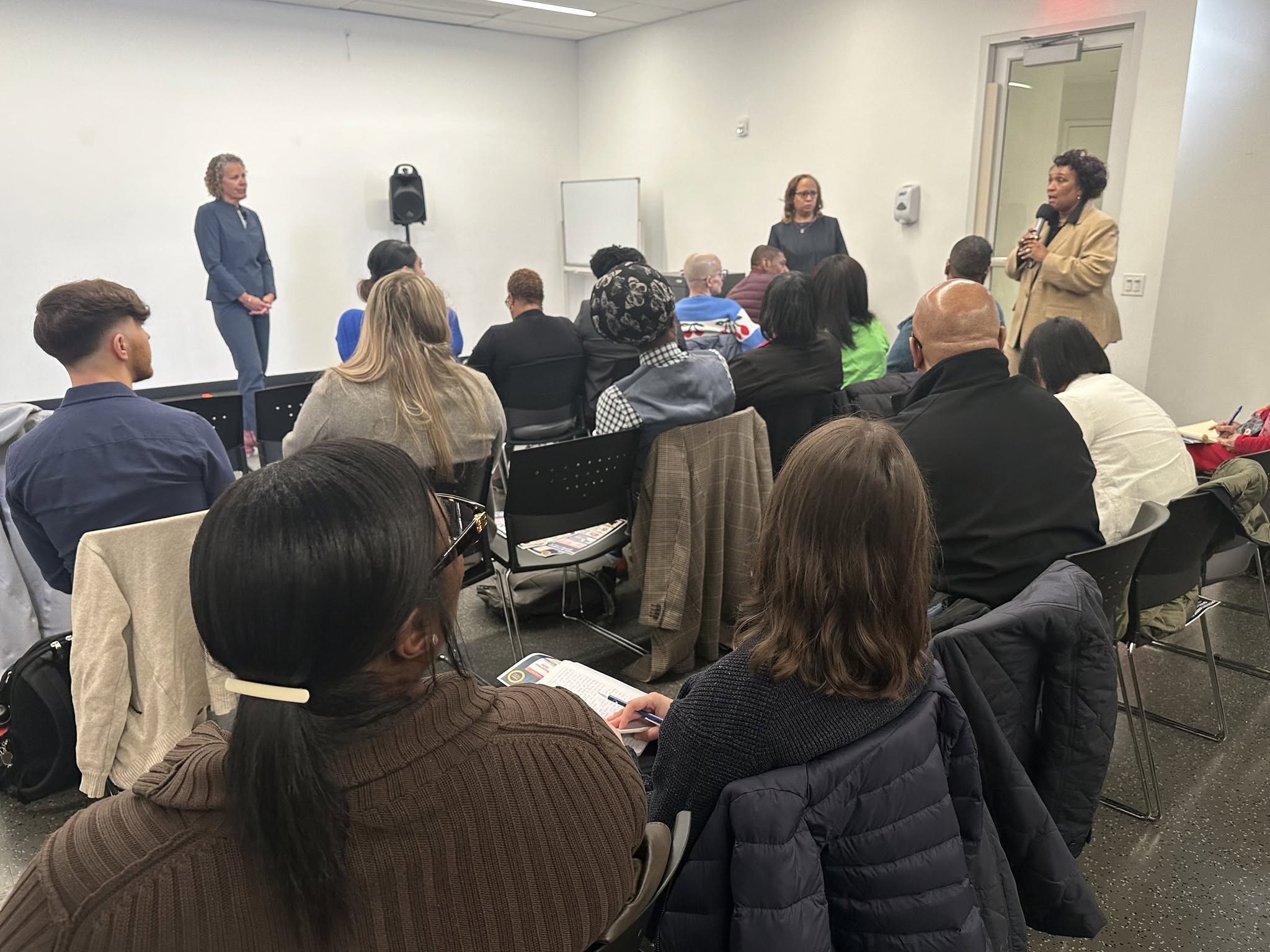
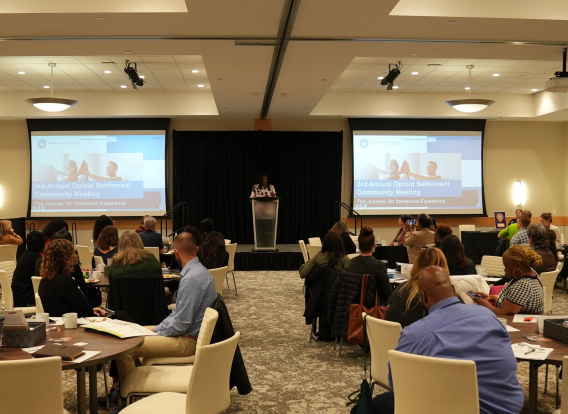
Community members, county officials and local treatment providers gathered Wednesday morning at the McKimmon Center at NC State University for Wake County's annual opioid settlement community meeting, an event meant to both report back on how the county has spent its share of national opioid settlement funds and gather input on where that money should go next.
Wake County is set to receive more than $67 million in opioid settlement funds over an 18-year period running from 2022 to 2038, money drawn from a series of national legal settlements with pharmaceutical manufacturers and distributors found to have fueled the opioid crisis through the marketing and distribution of prescription painkillers. The funds can only be used to address the opioid epidemic, and any spending plan requires formal approval from the Wake County Board of Commissioners.
"No amount of funding or programming can undo the years of harm done to our community from the opioid crisis," Wake County Commissioner Cheryl Stallings said. "However, these resources can offer a critical opportunity for healing and restoration. But they must be guided by the voices of those impacted the most."
Officials at the meeting pointed to a year's worth of work funded by the settlement dollars. In fiscal year 2025, the county said opioid settlement money helped support 4,075 recovery support contacts, paid for 134 free buprenorphine prescriptions, and put 4,710 naloxone kits into circulation. Panelists also highlighted two newer additions to the county's response: North Carolina's first mobile opioid treatment program and a newly opened recovery café and hub, both designed to reach people who might otherwise never walk into a traditional treatment clinic.
The Board of Commissioners approved a funding plan for fiscal years 2026 and 2027 back in June 2025, allocating more than $19.4 million across a list of strategies that includes $7.7 million for recovery support services, $4 million for recovery housing, $2.7 million for evidence-based addiction treatment, $2 million for early intervention, $800,000 for naloxone distribution, $1.1 million for addiction treatment for incarcerated individuals, $500,000 for criminal justice diversion programs, $350,000 for collaborative strategic planning, and $331,500 for education and prevention efforts.
Despite the investment, county staff were careful not to characterize the crisis as resolved.
Alyssa Kitlas, Wake County's opioid settlement program manager, told attendees that 169 people in Wake County died of an opioid overdose in 2024 — a decline from the 233 overdose deaths the county recorded in 2023, but still a toll Kitlas said remains elevated compared with pre-pandemic levels.
"Although we're seeing a decline, we're still seeing more overdoses than before COVID," Kitlas said.
That modest downward trend follows a $8 million infusion of new settlement money the Board of Commissioners approved earlier, drawn from two additional settlement agreements: one with Purdue Pharma and the Sackler family expected to bring $6.94 million to the county over 15 years, and another with eight generic opioid manufacturers expected to bring roughly $1.11 million over a decade. Those additional dollars push the county's total expected settlement funding to nearly $76 million.
"This funding represents more than just dollars, it gives us the ability to continue building a coordinated, community-wide approach to ending this epidemic," Stallings said of the newer settlement money. "With these additional resources, we can accelerate the progress we've started and continue saving lives."
The county's newly established Behavioral Health Department has taken the lead on directing the settlement funds in partnership with community providers, with a particular focus on expanding naloxone access, strengthening treatment and recovery programs, building out recovery housing, and lowering barriers to behavioral health services generally. Since July 2024, county staff said they have trained more than 345 people on how to administer naloxone and have distributed more than 1,000 naloxone kits.
Other speakers at Wednesday's meeting included Pete Rubinas of SMART Recovery, Megan Peevey of Arise Collective, and Cherene Caraco of Promise Resource Network, each representing organizations that partner with the county on treatment and recovery work funded in part by the settlement dollars.
Wake County first joined the national opioid settlement in November 2021, agreeing at the time to roughly $67.7 million over 18 years. North Carolina as a whole is expected to receive about $1.37 billion from the broader settlement, including an estimated $150 million from the Purdue and Sackler agreement and about $23 million from the generic manufacturer settlements.
Under the terms of the state's distribution agreement, 85 percent of settlement funds flow directly to local governments for use on opioid remediation programs.
County officials said the bulk of the money remains years away from being spent, with payments continuing through 2038, and they emphasized that the longer funding horizon gives providers a rare opportunity to plan multi-year programs rather than rely on the short-term grants that have historically defined addiction treatment and recovery funding. Staff said the county will continue to hold public input sessions, run community surveys and issue competitive solicitations — including recent requests for proposals tied to opioid-use education and prevention — as it shapes how future allocations are spent.
