
By Jheri Hardaway
Staff Writer
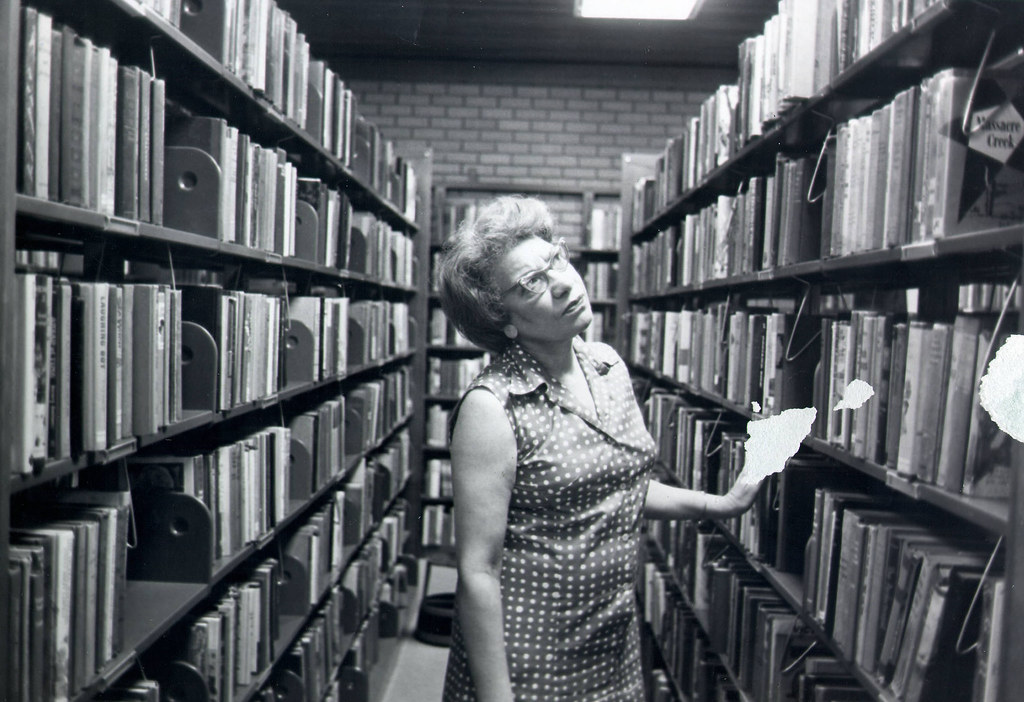
Mollie Huston Lee was the first African American librarian in Wake County and the founder of the Richard B. Harrison Wake County Library Branch. Not only did she leave behind a legacy of helping others and encouraging a love of literacy, but her treasured collection is a rare and special intellectual treat she left for us to share, analyze, and dissect. Mrs. Lee started and maintained a collection chronicling the African American experience locally, nationally, and internationally on the history of the African Diaspora. The literary collection comprises both adult and juvenile nonfiction, fiction, and journals. Images documenting the lives of African Americans in Raleigh are also digitized and available via the North Carolina Digital Heritage site.
To explore the collection is to take a walk back in time and view the world through the eyes of many of America’s best authors. With permission from the Wake County Library leadership, researchers can view signed and first editions, which make the collection even more priceless to those who value American history in its entirety.
One of the signed and exceptional texts I reviewed was written by Journalist and Politician George Washington Williams. Williams was a soldier in the American Civil War and in Mexico before becoming a Baptist minister, politician, lawyer, journalist, and leading writer on the subject of African-American history. He served as the first Black elected official in the Ohio House of Representatives. Called the greatest historian of the race by W.E.B.DuBois, George Washington Williams wrote the first comprehensive history of African Americans from their own point of view. His preeminent text, History of the Negro Race in America From 1619 to 1880. Vol 1: Negroes as Slaves, as Soldiers, and as Citizens was published in 1885.
History of the Negro Race in America From 1619 to 1880 stood out to me because I was seeking texts that spoke to African American involvement in the American Revolution. Perusing the table of contents, I observed an entire chapter on the subject and an impactful note in the preface, “THE NEGRO DURING THE REVOLUTION, I found much of an almost romantic character. Many traditions have been put down, and many obscure truths elucidated. Some persons may think it irreverent to tell the truth in the plain, homely manner that characterizes my narrative; but, while I have nothing to regret in this particular, I can assure them that I have been actuated by none other spirit than that of candor. Where I have used documents, it was with a desire to escape the charge of superficiality. If, however, I may be charged with seeking to escape the labor incident to thorough digestion, I answer that, while men with the reputation of Bancroft and Hildreth could pass unchallenged when disregarding largely the use of documents and the citation of authorities, I would find myself challenged by a large number of critics. Moreover, I have felt it would be almost cruel to mutilate some of the very rare old documents that shed such peerless light upon the subject in hand.”
Of the documents from then General George Washington, Alexander Hamilton, and other founding fathers that George Washington Williams used a first hand sources, many no longer exist. Williams due diligence to tell the story of African American Revolutionary War Veterans is one of our earliest and most vivid accounts outside of pension papers filed by veterans of all races from 1815 through the 1840s. There were non-African American fighters who put pen to paper describing the extraordinary efforts of Black soldiers. Williams ends the chapter with a powerful and impactful statement, “Enlistment in the army did not work a practical emancipation of the slave, as some have thought. Negroes were rated as chattel property by both armies and both governments during the entire war. This is the cold fact of history, and it is not pleasing to contemplate. The Negro occupied the anomalous position of an American slave and an American soldier. He was a soldier in the hour of danger, but a chattel in time of peace.”
Mollie Huston Lee has given us a pathway towards our history and our collective American truth. Authors like George Washington Williams and his historic text deserve the history and protection granted by the library. Looking forward to sharing more stories from the Mollie Huston Lee Collection.
