
By Jordan Meadows
Staff Writer
Althea Gibson was one of the first Black athletes to cross the color line of international tennis and golf, becoming one of the most historically significant figures in sports.
Born on August 25, 1927, in Silver, South Carolina, Gibson was the daughter of sharecroppers before her family relocated to Harlem during the Great Migration. There, she grew up in a working-class neighborhood and developed an early talent for athletics, first excelling in paddle tennis before transitioning to lawn tennis through the support of community members who recognized her potential.
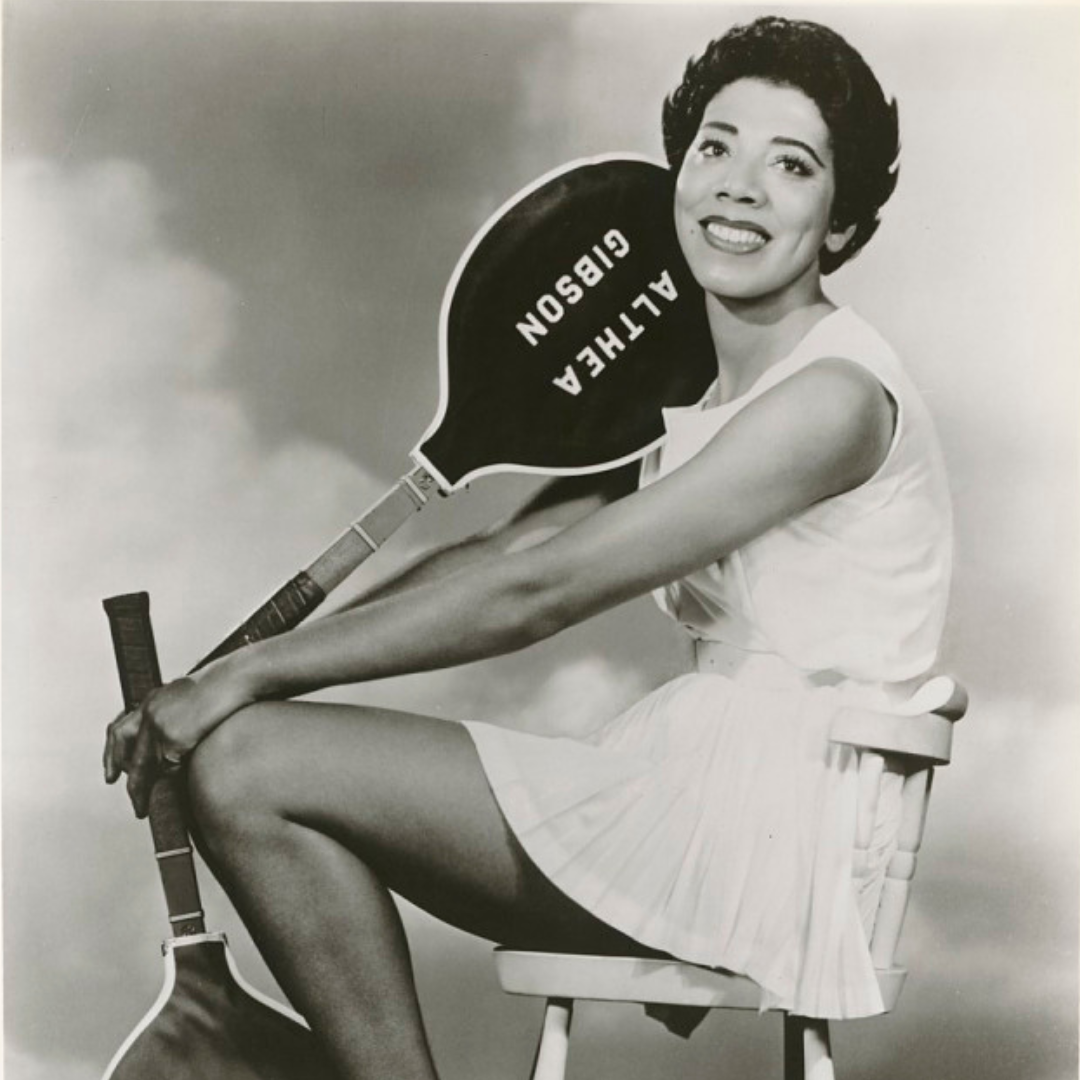
Despite a turbulent childhood that included dropping out of school and periods of instability, Gibson’s athletic ability quickly distinguished her, and by her teenage years, she was winning local and national titles through the American Tennis Association (ATA), a circuit established for Black players excluded from white-only competitions.
Gibson’s ascent came at a time when segregation defined much of American life, including sports. Although she dominated ATA competition throughout the 1940s, she remained effectively barred from elite national tournaments due to systemic exclusion. That barrier began to break in 1950, when, after public pressure and advocacy from prominent figures in tennis, Gibson became the first Black player invited to compete in the U.S. National Championships at Forest Hills.
Her debut drew national attention and marked a turning point in the integration of professional tennis, drawing comparisons to the earlier desegregation of Major League Baseball by Jackie Robinson.
Building on that breakthrough, Gibson steadily rose through the international ranks.
She competed at Wimbledon for the first time in 1951 and, by the mid-1950s, had established herself among the world’s top players. In 1956, she made history by becoming the first Black athlete to win a Grand Slam singles title at the French Championships, a victory she complemented with a doubles title the same year. Her dominance peaked in 1957 and 1958, when she won consecutive Wimbledon and U.S. National singles titles, becoming the first Black champion at either tournament.
In 1957, she was seeded first at Wimbledon and went on to claim the title, later receiving the trophy from Queen Elizabeth II—an iconic moment that underscored the social barriers she had overcome. That same year, she was honored with a ticker-tape parade in New York City, one of the first Black athletes to receive such recognition.
Over the course of her amateur career, Gibson won 11 Grand Slam titles, including five in singles, five in doubles, and one in mixed doubles. She was ranked the world’s top female player in both 1957 and 1958 and was named the Associated Press Female Athlete of the Year in consecutive years.
Despite her success, Gibson’s career was shaped by the financial limitations of amateur tennis in that era, which offered little prize money or endorsement opportunities. After retiring from amateur competition in 1958, she struggled to translate her dominance into financial stability. She briefly toured as a professional tennis player in exhibition matches and pursued opportunities in entertainment, recording an album and making television appearances.
In 1964, she broke another racial barrier by becoming the first Black woman to compete on the Ladies Professional Golf Association (LPGA) tour, where she played for more than a decade.
Beyond competition, Gibson dedicated much of her later life to public service and youth development. She worked as a coach, ran tennis outreach programs in underserved communities, and held leadership roles in sports administration, including serving as New Jersey’s athletic commissioner—the first woman to hold such a position.
She also made a foray into politics, running for a state senate seat in New Jersey in 1977.
In her later years, Gibson faced strokes and mounting medical expenses. Support from the tennis community, including fundraising efforts led by former doubles partner Angela Buxton, helped provide relief. Gibson died on September 28, 2003, at the age of 76.
Gibson’s achievements paved the way for generations of athletes, including stars like Venus and Serena Williams, and reshaped the landscape of professional tennis and golf. Inducted into the International Tennis Hall of Fame in 1971 and the International Women’s Sports Hall of Fame in 1980, she remains widely recognized for breaking barriers that extended far beyond the court.
