
By Dominique Heath
Columnist
The North Carolina Association of County Commissioners (NCACC) brought student filmmakers, educators, local leaders and community members together at The Cary Theater for the Second Annual NCACC 100 Strong Productions Student Film Festival, a statewide event centered around storytelling, local history and community impact through film.
Hosted by NCACC’s documentary division, 100 Strong Productions, the festival gave students from counties across North Carolina an opportunity to showcase their work across county lines while sharing stories unique to their own communities. The event featured filmmaking workshops, keynote presentations, student film screenings, filmmaker discussions and an awards ceremony celebrating young creators from across the state.
The North Carolina Association of County Commissioners represents all 100 counties across the state, working to strengthen county government through advocacy, education, leadership development and collaboration between counties. Organizers throughout the festival emphasized that county government is often the closest level of government to residents, shaping daily life through schools, roads, parks, health services and community programs.
“County government is the level of government closest to home,” Chris Baucom, Director of 100 Strong Productions said during the festival. “It shapes your schools, your roads, your parks and the services that your family uses every day.”
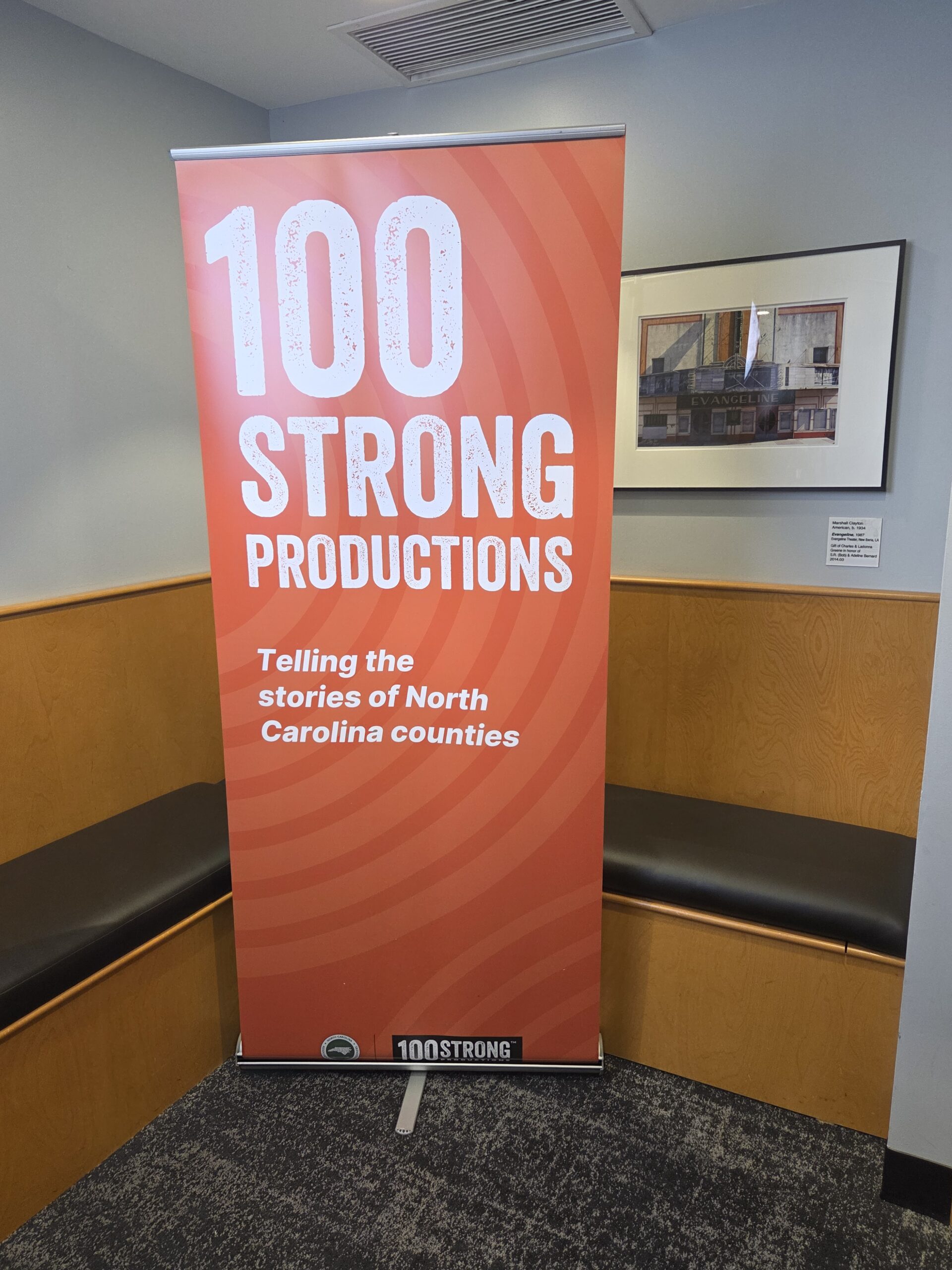 100 Strong Productions was created in 2021 as the storytelling and documentary production arm of NCACC with the mission of documenting the people, issues and experiences shaping North Carolina counties through film.
“This team was built with a clear mission to explore important topics, to shine a light on the unique stories from across North Carolina’s 100 counties through the art of documentary filmmaking,” one speaker shared during the opening presentation.
Since its creation, the production company has produced documentaries exploring issues such as food resiliency, veteran services, workforce shifts and the impacts of Hurricane Helene. Organizers explained that the student film festival expands that mission by encouraging young filmmakers to document stories from their own communities and experiences.
Brielle Barozzini, production coordinator for NCACC 100 Strong Productions, welcomed attendees and thanked students, families, The Cary Theater and NCACC staff for helping bring the festival together after nearly a year of planning. Barozzini said the festival was designed not only to celebrate student creativity, but also to give young filmmakers the opportunity to learn from industry professionals while sharing stories rooted in their own communities.
“We want to tell stories that aren’t told by other production companies. The whole purpose is to tell the stories of North Carolina counties from a different perspective.”
Blake Kinsey Workshop Encourages Young Filmmakers
The day began with a filmmaking workshop titled Making Your First Short Film, led by Durham filmmaker Blake Kinsey, founder of Back Porch Films.
Kinsey, a graduate of Western Carolina University whose films have appeared in several independent film festivals, spoke candidly with students about the realities of filmmaking and the importance of preparation, collaboration and flexibility throughout the production process.
Throughout the workshop, Kinsey broke filmmaking into three major stages: pre-production, production and post-production. He explained how planning, scheduling and organization often determine whether a project runs smoothly once filming begins.
He described production as “organized chaos,” while emphasizing the importance of backup plans and adaptability during filming.
Kinsey also challenged students to stop viewing filmmaking as something inaccessible or reserved for large studios. Instead, he encouraged attendees to work creatively with the resources available to them, whether that meant using phones, local businesses, public spaces or family and friends as part of productions.
The workshop also stressed teamwork and communication, with Kinsey explaining that filmmaking is one of the most collaborative forms of storytelling. Students were encouraged to remain open to learning while also staying committed to the stories they wanted to tell.
“Stay true to your vision. Don’t compromise if it will dim the final product.”
Deborah Holt Noel Reflects on Storytelling and Legacy
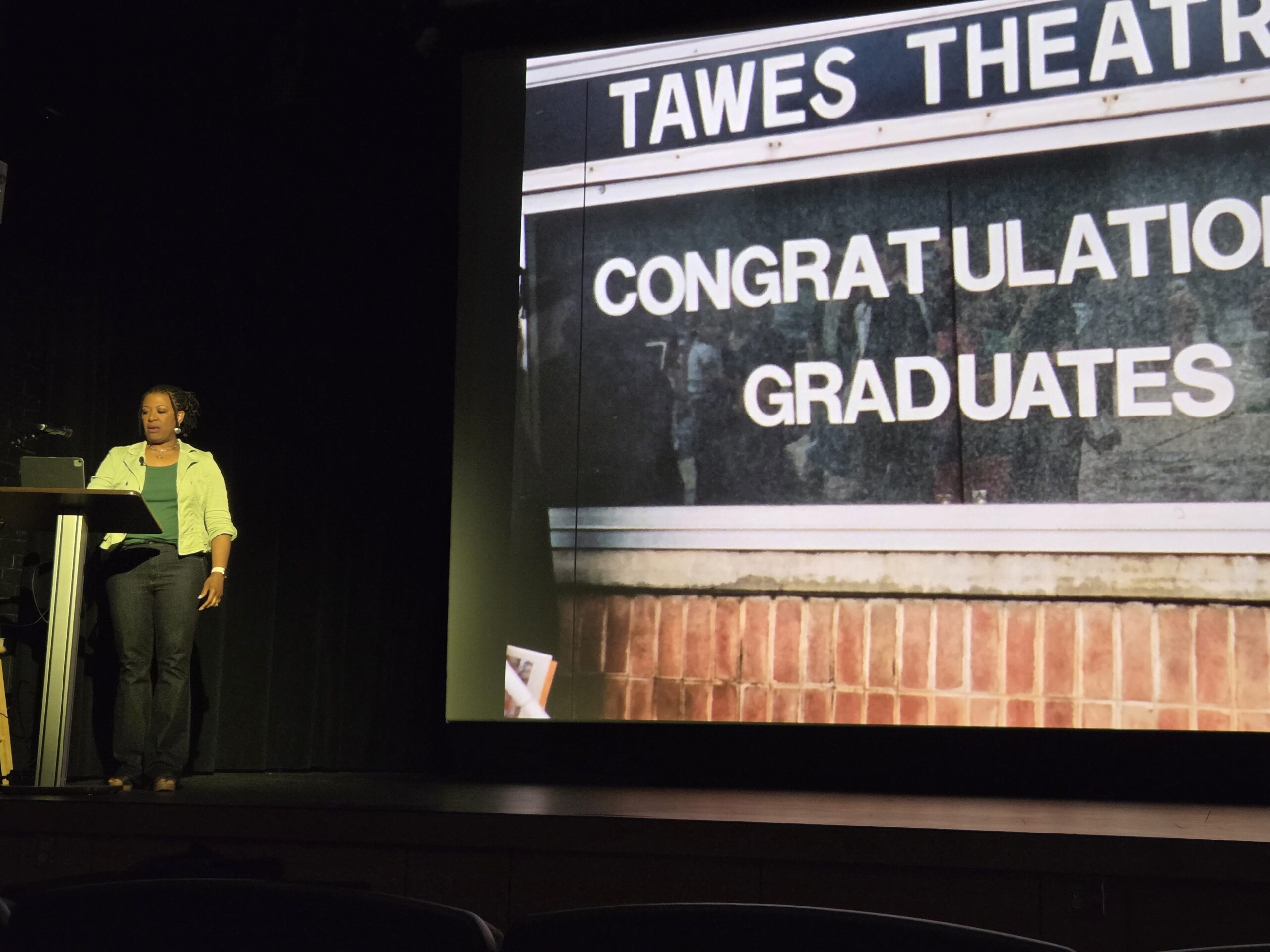
Following an afternoon intermission, attendees returned for a keynote presentation from Deborah Holt Noel, executive producer of Black Issues Forum and host of PBS NC’s Emmy-nominated North Carolina Weekend.
Noel’s presentation, titled The Work of Storytelling, became one of the emotional centerpieces of the festival as she reflected on her decades-long career in journalism and documentary filmmaking.
Speaking directly to students, Noel described the fear and uncertainty she experienced early in her filmmaking career while pursuing a graduate degree in television production at the University of Maryland. She recalled moments of self-doubt where she questioned whether she belonged in the industry at all.
“I felt this suffocating silence,” Noel said while describing an empty production building after class. “I was feeling like, ‘Why am I here? I made a mistake. I should stay where I was because I don’t belong here.’”
Noel explained that her perspective changed while creating a documentary about her own family’s role in integrating Raleigh public schools. The film, Exhausted Remedies: The Joe Holt Story, focused on her father and her family’s civil rights history in North Carolina.
At the time, Noel said she worried nobody would care about the story or understand its importance.
“I spent so much time worrying about whether the story was good enough,” she said. “And somewhere along the way, I realized that wasn’t my job. My job was to tell the story as truthfully as possible.”
The documentary would later help preserve and elevate her family’s legacy in Raleigh history through public recognition, historical markers and community remembrance connected to her father’s story.
Throughout her keynote, Noel emphasized that storytelling is not about the filmmaker’s ego, but about listening carefully and honoring the experiences of the people willing to trust someone with their story.
“When someone trusts you with their story, that matters,” Noel told attendees. “It’s about listening and it’s about care.”
She also encouraged students not to dismiss local or personal stories because they may initially seem small.
“You don’t know whose life can be changed as a result of you giving it some air and giving it some light,” she said.
Student Films Highlight Community Stories Across North Carolina
The centerpiece of the festival was the screening of eight student-produced films from counties across North Carolina. Together, the projects explored themes including economic development, natural disasters, food insecurity, immigration, history, public service and community resilience.
One of the opening films, Economic Growth from Johnston County, was created by Tyler Goodson, Lucien Rattray and Kamarri Justice. The documentary explored the direction and expansion of Johnston County while examining how growth is reshaping the county’s future and identity.
Johnston County was featured again in The Hands That Built Our Homes, created by Nolan Fox, Damien Marte and Joshua Hodges. Told partly through the perspective of a county commissioner, the documentary explored the rapid development of the county while focusing on the labor, leadership and planning involved in building growing communities.
One of the festival’s most emotional films was Heart of Rock by Rutherford County filmmakers Nikhil Mehta and Grant Sizemore. The documentary centered around Hurricane Helene and the devastation experienced by residents in the aftermath of the storm. Through interviews and community footage, the filmmakers documented both heartbreak and resilience as neighbors worked together to rebuild homes, businesses and their lives.
Wake County student Eva Awasthi, one of the youngest filmmakers featured at the festival, explored food insecurity among students in Helping the Hungry: Food Insecurity Among Students in the Wake County Public School System. The documentary examined the realities many students face when access to food is uncertain while also highlighting the importance of school meal programs and public health initiatives. The film focused not only on hunger itself, but also on how food insecurity affects students emotionally, academically and socially.
Highway 251 by Buncombe County filmmakers Grace Ellen Callihan and Brooke Darby served as both a documentary and a public safety message focused on cyclist safety. The film was created following a devastating accident that killed cyclists Jake Hill and Lennie Antonelli while seriously injuring Griffin Tichenor. Through interviews and reflective storytelling, the filmmakers urged viewers to prioritize cyclist safety and remain aware of the dangers cyclists face on North Carolina roads.
Johnston County students Evelyn Pascucci and James Anderson highlighted innovation and youth opportunity in Robotics, a documentary centered around the importance of robotics programs and clubs for students interested in engineering, technology and future career opportunities.
One of the festival’s most historically ambitious projects was The Story of George Moses Horton by Chatham County filmmaker Jordan Wiley. The film explored the life of George Moses Horton, an enslaved North Carolina poet who became one of the first published Black authors in the South. Through historical reenactments and storytelling, the documentary brought Horton’s legacy to life while educating audiences on a figure often overlooked in mainstream history discussions.
The final featured film, Against The Flames by Mecklenburg County filmmaker Lana Butler, told the deeply personal story of a Vietnamese family that immigrated to the United States during the height of communism after finding refuge through an American missionary church. The documentary centered around a mother who postponed her dream of becoming a firefighter while raising her children before eventually becoming a firefighter engineer 14 years later. Told through the eyes of her daughter, the film explored sacrifice, immigration, public service and family legacy while highlighting the family’s commitment to giving back to the community that welcomed them.
Following the screenings, students participated in a filmmaker Q&A session where audience members asked about editing software, filming techniques, storytelling approaches and the challenges of documenting real-life experiences.
Among those attending the festival was Alex Melendez, founder of The GRID — Groundwork, Resilience, Innovation, Drive — a nonprofit organization committed to empowering youth from inner cities through mentorship, education, discipline and opportunity.
“Attending the 100 Strong Productions Student Film Festival was an incredible experience,” Meledez said. “I was genuinely impressed by the students’ presentations, their creativity, growth and the level of skill they displayed through film. It was inspiring to see young talent develop their voices and tell meaningful stories, and the educators behind them deserve recognition for helping cultivate that potential.”
As a New York native who has only lived in North Carolina for a few years, Melendez said the festival also deepened his appreciation and understanding of the state itself.
“Beyond the event itself, I also walked away learning more about North Carolina,” he said. “This state continues to amaze me — the culture, the sense of community, the diversity, the politics and especially its deep history. Coming from the North, where my perspective was shaped by a different lens, it was eye-opening to better understand the divisions, systems and historical realities that still connect to the present day. I appreciate having the opportunity to learn more about the state I now call home.”
As the festival continues to grow, organizers hope it will eventually expand beyond North Carolina while still maintaining its focus on community-centered storytelling. Brielle Barozzini said she envisions the NCACC 100 Strong Productions Student Film Festival becoming a nationwide platform where young filmmakers from across the country can share stories, showcase their work across state lines and connect with one another through film and storytelling.
