
By Louie Ross l
Special to The Carolinian
Rev. Gina Stewart made history in January 2024 by becoming the first woman to preach at the joint gathering of the major National Baptist conventions. The moment drew national attention and sparked conversation about the role of women in Black Baptist leadership. Rev. Stewart is a well-known Baptist leader who in 2021 also became the first woman president of the Lott Carey Baptist Foreign Mission Society, a major historic Baptist mission organization. In 2025, Rev. Tracey L. Brown became the first woman to preach at the annual meeting of the National Baptist Convention USA itself. These recent milestones demonstrate the gradual opening of convention platforms to women preachers in the more conservative Baptist Conventions.
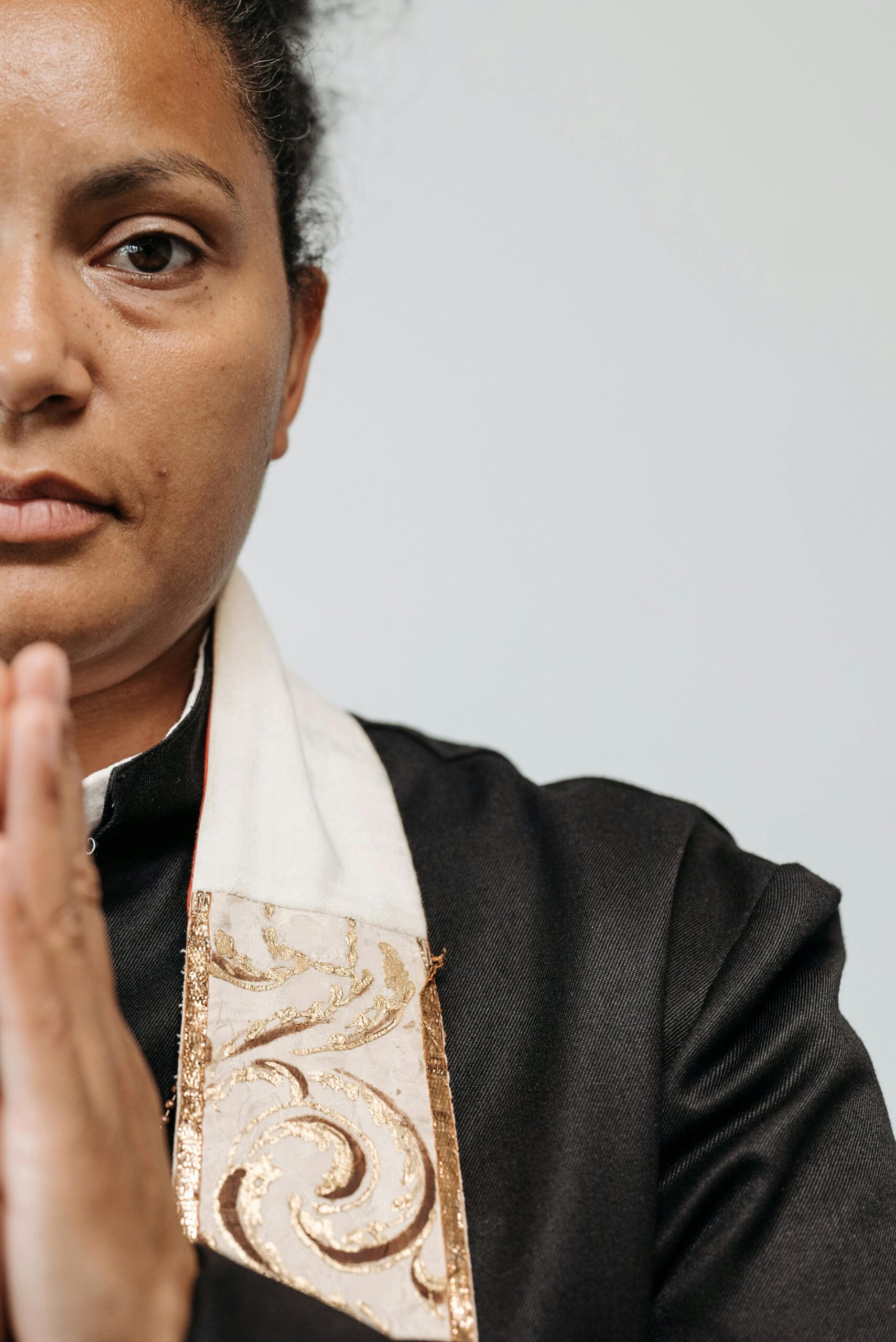 The Black Baptist tradition represents one of the most common denominations among Black churches in the United States. These congregations exist within a complex landscape where churches may align with larger conventions or operate as independent bodies guided by local bylaws, deacon and trustee leadership, and congregational traditions. This church diversity creates varying practices regarding women's ordination and service as senior pastors.
The question of women's pastoral leadership in Black Baptist churches passes through multiple factors: biblical interpretation, social change, leadership philosophies, church governance structures, and historical context. Some congregations embrace more progressive views on women in ministry, while others maintain more conservative positions rooted in traditional interpretations of scripture. Because Black Baptist churches tend toward congregational autonomy, practices vary significantly both across and within denominational families.
The Black church has historically occupied a central place in social, political, and cultural life. W.E.B. Du Bois recognized the Black church as a multifunctional institution serving purposes that included mutual aid, cultural expression, political mobilization, and spiritual formation. Within this tradition, the senior pastor holds a position of exceptional influence—one that shapes the congregation’s theological identity, its engagement with community concerns, and its internal norms about who is qualified to lead.
The question of whether women should serve in this role—as senior pastor—has been a matter of considerable debate across American Protestantism. In some denominations, the issue has largely been settled in favor of inclusion; in others, particularly those with more traditional theological orientations, formal barriers remain. The Black Baptist tradition presents a particularly complex case because it encompasses a spectrum of denominations, from the more conservative National Baptist Convention, USA, Inc., to the more progressive Progressive National Baptist Convention (PNBC).
Each convention—and often individual local churches—makes decisions based on multiple factors, creating complexity in understanding attitudes regarding women as senior pastors. This decentralized structure can generate both conflict and frustration among church members, particularly given that women constitute the majority of participants in most Black Baptist congregations.
Generally, the Progressive National Baptist Convention, American Baptist Churches USA, Cooperative Baptist Fellowship, and Free Will Baptist Churches accept women as pastors, though actual numbers remain relatively low. More conservative conventions, including the National Baptist Convention USA, National Baptist Convention of America Inc., and National Missionary Baptist Convention of America, typically do not accept women as pastors. However, practices vary widely within conventions, and churches may shift toward more progressive policies over time.
The Southern Baptist Convention, with which a smaller number of Black churches affiliate, maintains strict prohibitions against women serving as pastors and has expelled churches that called women to pastoral leadership. This stance was demonstrated in the 2023 expulsion of Saddleback Church, led by Rick Warren, after the congregation ordained women as pastors.
Several other Christian denominations—including Methodists, Pentecostals, Presbyterians, Lutherans, and Episcopalians—have more readily embraced women's ordination. However, even within these groups, individual churches may restrict women from pastoral roles. African American churches reflect this tension. Some predominantly Black denominations, such as the Church of God in Christ (COGIC), do not permit women to serve as pastors, though women may serve as evangelists and missionaries.
Theological and scriptural interpretations within Black Baptist churches have historically been the source of a range of attitudes regarding women's leadership roles. In many congregations, women have been restricted from the senior pastorate because of traditional interpretations of biblical teachings on gender, particularly passages such as 1 Corinthians 14:34-35 and 1 Timothy 2:11-12. Interpretations of these passages vary considerably.
Despite these restrictions, women have played vital roles in education (teaching Sunday School and Bible study), music ministry, and social outreach through missions and community services. Black women have consistently demonstrated greater representation and participation than men in Black church congregations. While women constitute a majority of church workers, they have been underrepresented in senior leadership positions.
This pattern reflects a broader tension within the Black church tradition: between its progressive commitments on issues of racial justice and its more conservative posture on questions of gender. The US Senator and pastor Raphael Warnock has observed that the Black church has tended to be strong on social justice while remaining comparatively weak on gender justice.
Using survey data from the Pew Research Center’s “Faith Among Black Americans” study, it examines the distribution of attitudes across several demographic, religious, and political variables. The main question was whether women should be allowed to serve as a senior pastor of a congregation.
The Pew Research Center surveyed 8,660 Black adults (2019–2020), including 2,663 Black Baptists. Baptists were the largest denomination (46%), followed by non-denominational churches (17%) and Pentecostals (11%).
Among Black Baptists, 88.3% supported women as senior pastors. Support was strong across both genders (89% of women, 87% of men) and highest among younger adults. Never-married individuals (92%) and those with a bachelor’s degree or higher (90%) also showed slightly stronger support.
Religious behavior showed an inverse relationship: those who prayed less and attended church less frequently were more supportive, while frequent attendees and those who viewed religion as very important showed lower support. Politically, support was highest among liberals, followed by moderates and conservatives.
The findings show that nearly nine in ten Black Baptist respondents believe that women should be permitted to serve as the senior religious leader of a congregation. This suggests that formal barriers do not reflect the attitudes of most pew members.
The 12 to 27 percent of respondents who oppose women’s pastoral leadership are concentrated among those most deeply embedded in congregational life. This means opposition is not simply marginal—it is present among influential members of the congregation.
This pattern creates tension for congregational change efforts. The institutional gatekeepers—deacons, trustees, pastoral search committees, and denominational leadership—are often drawn from those least supportive of women in senior pastoral roles.
This dynamic has been described as a “gatekeeper problem,” where institutional processes empower those who prefer the status quo.
For women who feel called to serve as senior pastors, the findings offer both encouragement and caution. Most of the people in the pews are supportive, but institutional power may not reflect that majority.
Scholars have identified strategies for navigating these realities, including building relationships with key leaders, mentorship, and engagement with supportive denominational networks.
Congregational education is also important. Teaching on biblical examples of female leadership can help shift perspectives over time.
Churches that have successfully transitioned to women’s pastoral leadership can serve as models, offering practical insight into managing resistance and supporting new pastors.
Implications of this study also speak to broader questions about the Black church’s role in leadership development. Excluding women from top positions limits both the church and the broader pipeline of Black leadership.
At the same time, the data suggest that community attitudes are more progressive than formal policies, creating pressure for change.
This study examined attitudes toward women serving as senior pastors using Pew Research Center data. The findings reveal broad support across the Black Baptist community.
The most consequential finding concerns religious engagement: those most deeply embedded in church life are the least supportive. This creates a structural paradox that requires attention to institutional processes.
Political conservatism also emerges as a factor, reflecting diversity within Black Baptist congregations.
The overwhelming majority of Black Baptists support women’s pastoral leadership. The challenge is translating that support into institutional practice.
Pew Research Center bears no responsibility for the analyses or interpretations of the data presented here. The opinions expressed herein are those of the author.
