
By: Jordan Meadows
Staff Writer
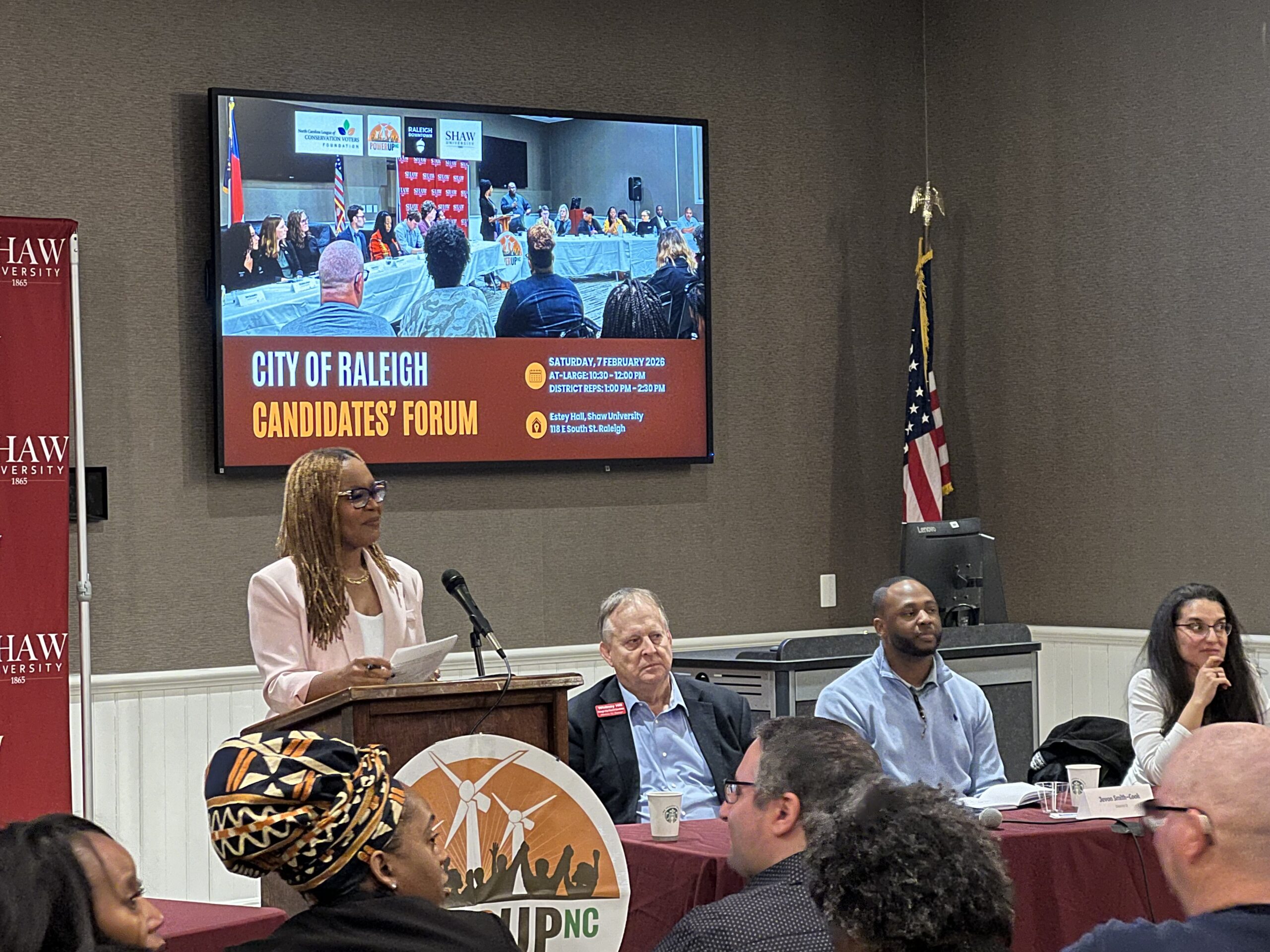
Raleigh voters had the opportunity to engage with candidates for mayoral, at-large, and district city council seats at the Non-Partisan Candidates’ Forum held Saturday, February 7, 2026, at Shaw University. The event offered residents a chance to hear directly from candidates, ask questions, and discuss issues shaping Raleigh’s future, including housing, public safety, transportation, and community resources.
The forum was divided into two sessions. This year, Raleigh voters will face primaries for some council seats for the first time. All city residents will vote for two at-large seats, while District C voters will select one candidate from a four-person field.
In the afternoon session for District C, which covers southeast Raleigh, incumbent Corey Branch faced challengers Jared Ollison, a North Carolina State Capitol police officer and former Wake County Detention Center administrator, and Diana Powell, a violence prevention specialist and founder of a criminal justice reentry nonprofit.
Branch highlighted his record on affordable housing and public transit improvements, noting his role in bringing the BRT corridor to New Bern Avenue. He also cautioned against misrepresenting community desires, saying, “That’s not what the community ever said they wanted. The community said they wanted retail,” in reference to a proposed development near New Hope Road in Olde Towne Subdivision.
During the forum, tensions emerged over transparency and campaign funding. Powell criticized the council, stating, “I believe that’s what’s missing: you voted, but we don't understand why you voted.”
Ollison emphasized ethics in fundraising, saying, “All City Council persons, all government officials, need to make sure that when they are campaigning and raising funds, they do not accept funds from anyone who has business with the city. I will not allow them to bulldoze our communities; I will not allow them to bulldoze Shaw University.”
Branch responded, defending his record and campaign finances: “I’m a Raleigh native, born and raised…. Why in the world would I ever try to hurt the community that I grew up in?” He added that all contributions to his campaign are fully accounted for and publicly disclosed.
For other Council seats, candidates included Megan Patton, Christina Jones, and Whitney Hill.
Patton, elected in 2022, emphasized transit, sustainability, and affordable housing, noting that despite setbacks to the Moore Square project, “It is true that the whole vision of that is not going to be able to be delivered the way it was originally afforded at the time. It is true that the changes in interest rates have shifted things. But that does not mean we’re not going to deliver on the goal of putting affordable housing in the heart of downtown.”
Hill, running for her third time, focused on public safety, tax reduction, and expanding housing availability. Patton and Hill also discussed solutions to homelessness, with Patton emphasizing mental health support, while Hill highlighted affordable housing initiatives.
Council member Christina Jones, a two-term incumbent, highlighted programs aimed at reducing homelessness and domestic violence, saying, “We started the CARES program to help work with mental health and issues with domestic violence,” noting that the council approved $5 million for workforce development and stability programs last year. She emphasized collaboration with county agencies through initiatives like Bringing Neighbors Home to address homelessness comprehensively.
Jevon Smith, a candidate for the Raleigh City Council District D seat, also appeared at the forum, highlighting more than 15 years of experience leading large business and government initiatives at the state and federal levels. Smith said his campaign is centered on housing, transit, and environmental issues, and argued that current development laws limit the authority of local elected officials.
He told attendees that the city council is often “at the will of the developer” during negotiations and said Raleigh should work with the state to appeal portions of the law to expand local oversight, which he said would allow the city to exert greater control over development decisions and growth.
B udget considerations and employee benefits were also discussed, with candidates emphasizing fiscal responsibility alongside support for city workers.
When asked about benefits such as depression pay for firefighters, Patton noted, “When I look at the budget, I say it’s not about what’s too expensive, it’s about what your growing rates are – and we had email after email from people saying they want to support our firefighters. We want to give them this benefit.”
The forum provided residents with a comprehensive view of the candidates’ positions ahead of Raleigh’s upcoming elections on Tuesday, March 3, 2026.
