
By Jordan Meadows
Staff Writer
The Pleasant Grove Redevelopment Project marks a major step in restoring and reimagining one of Wendell’s most historically significant African American community sites, centered on the former Carver School and Pleasant Grove Community Church campus.
The campus includes a 3.15-acre site, with a western building constructed between 1949 and 1959, currently known as the Carver Center, which today houses a daycare and a community food pantry. To the east stands the former Carver School building, built by 1949 on the site of an earlier Rosenwald School that was destroyed by fire in the 1940s. That structure has been vacant for roughly 20 years. A small brick shed sits south of the two main buildings. Under the redevelopment plan, the former Carver School will be renovated into a new community center, while continuing and expanding the site’s longstanding role as a neighborhood anchor.
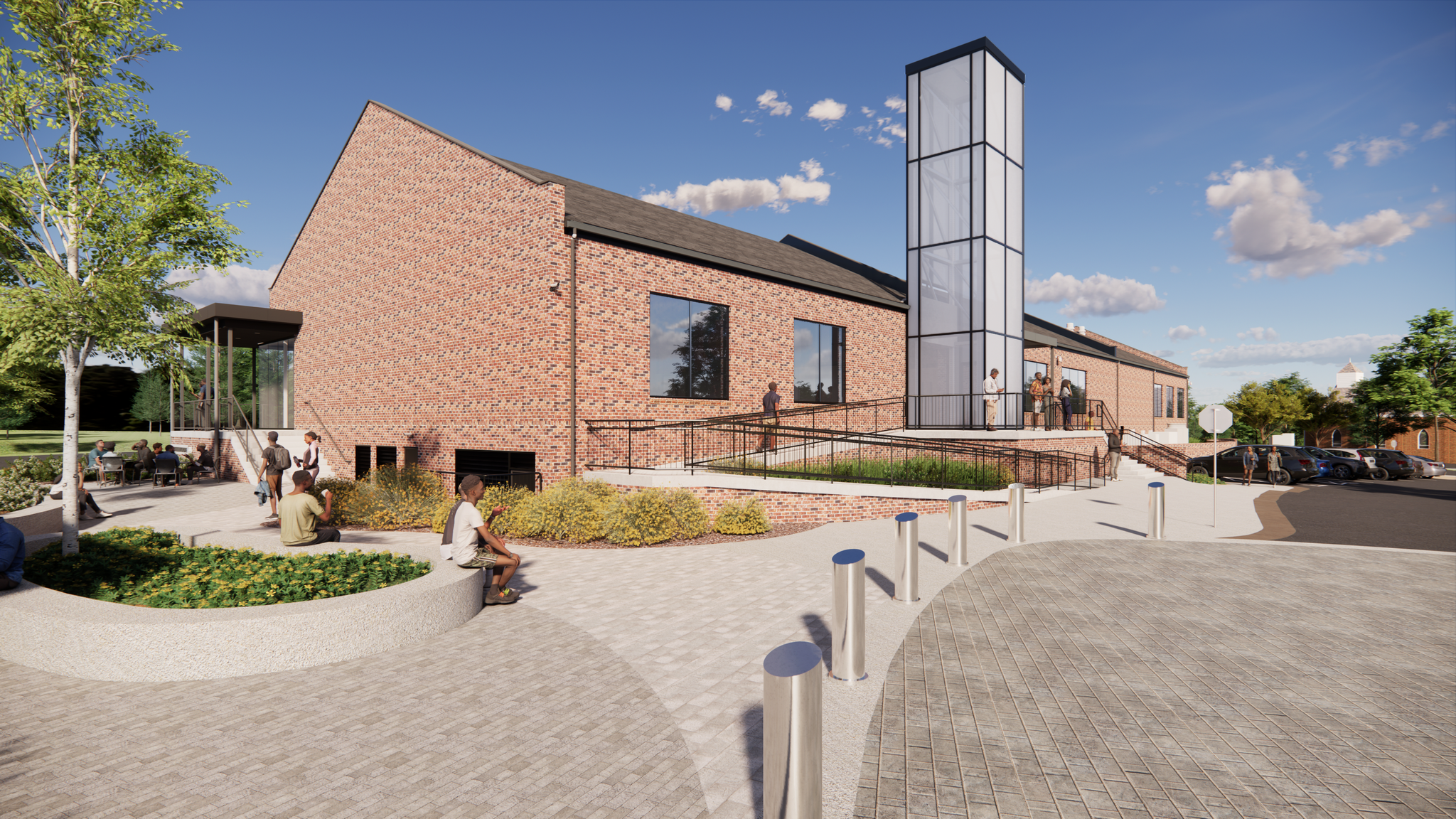
The proposed Carver Community Center at Pleasant Grove is envisioned as a comprehensive hub for services and programs, including afterschool, track-out, and summer camp programs; job development services; space for nonprofit organizations to provide services; performing arts space within the retained auditorium; inclusive program areas suitable for multigenerational and multi-capable community members; universal design to ensure full Americans with Disabilities Act compliance; and space to continue onsite food security efforts.
The school and church property were only recently annexed by the town, despite the Pleasant Grove community existing long before Wendell’s incorporation.
Pleasant Grove Community Church, founded in 1863, has been central to that history. The school originated as part of the church and, in the early 1900s, became a Rosenwald School, part of the nationwide effort to educate Black children in the segregated South.
Asa Bell, pastor of Pleasant Grove, emphasized the site’s historic role, saying, “This school served historically as a community anchor; a community asset. This is where black folk gathered, this is where assemblies occurred. Many of the teachers who taught at the school attended the church––there was a partnership.”
Bell noted that many successful Black residents who grew up in the area credit the Carver School as foundational to their achievements beyond Wendell.
In 2007, the church purchased the two school buildings and the land from Wake County, returning the property to local ownership and renewed community use. From the campus, the church helped birth a food pantry, after-school programs, and workforce development initiatives, often in partnership with the county.
During the COVID-19 pandemic, however, one of the buildings was boarded up and became an eyesore, requiring more resources to redevelop than the church could provide alone. At the same time, the church served as a vaccine and COVID testing site, as church and town leaders began broader discussions about restoring the property and addressing historic inequities.
“The town committed significant funds to the project. They reached out to county, state, and federal entities to solicit additional funding. What came from that was a $2M appropriation from Congress, with Deborah Ross leading the effort,” Bell said.
The project, years in the making, is supported by federal funding, contributions from Wake County, and local dollars. A groundbreaking held this past October brought together some of the church’s oldest members alongside elected officials and town staff.
Marc Collins, Wendell’s town manager, described the partnership between the town and the church as intentional and relationship-driven.
“There are deliberative conversations about trust, to help build relationships and have conversations. It’s important to understand that nothing happens without people getting to know each other and establishing trust,” Collins said.
 He added that the town and Pleasant Grove shared values and goals, and that the investment was meant to signal that the community is an integral part of Wendell: “The town wanted the community to know they were part of the town itself and the broader community by investing time, money, and energy into it,” Collins said.
Collins explained that the long-term facility lease agreement with the church allows the town to operate the center while respecting the property’s legacy and limitations.
“The town is able to do a long-term facility lease agreement with the church, so we understand what our limitations are and our limitations on the use of the property. We want to make sure it’s protected and secure, and available to the public while also providing community programs,” Collins said.
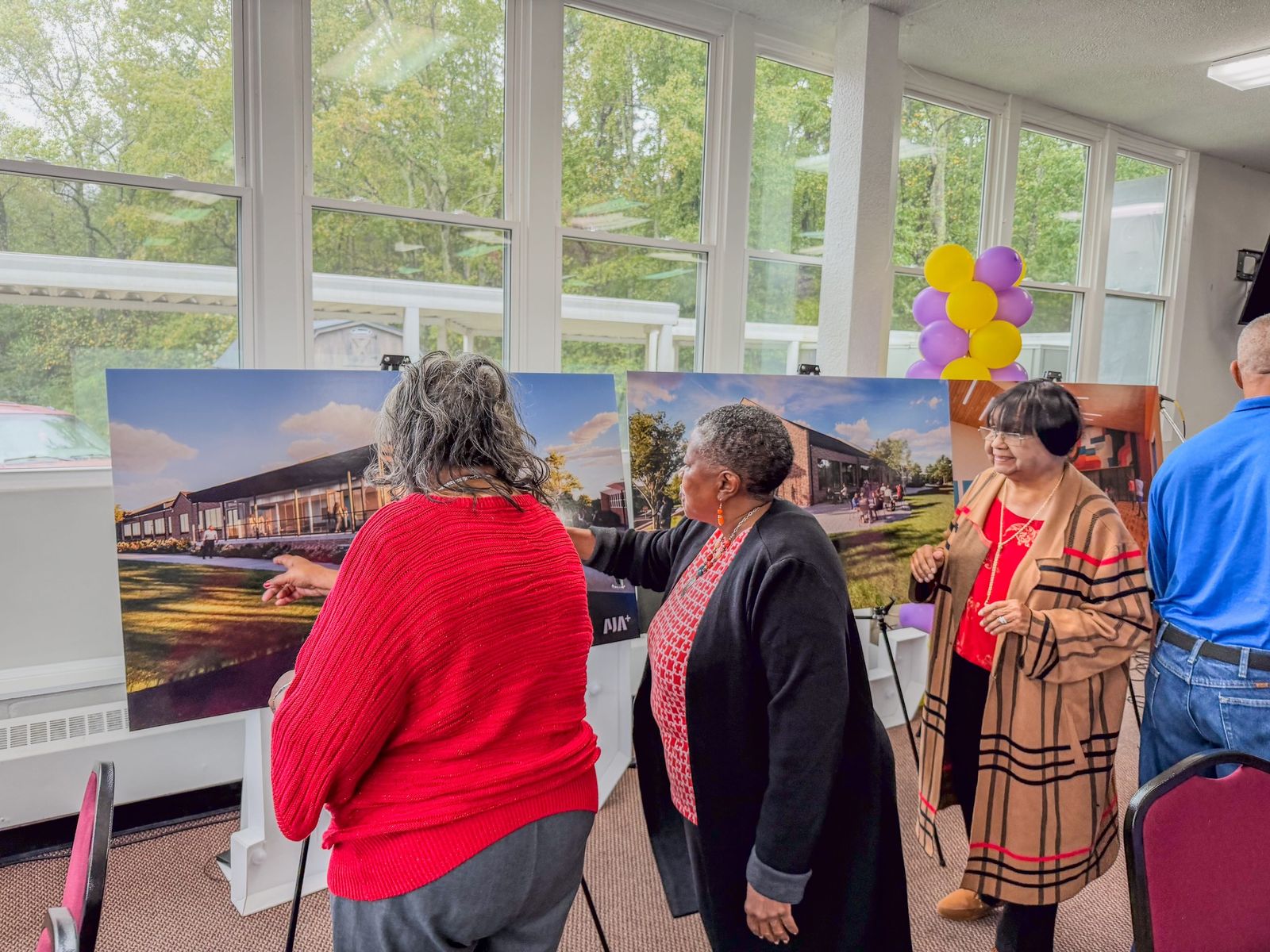
Community engagement has been central to the redevelopment process. Church members and residents were invited to meetings to review architectural renderings, offer comments, and provide feedback on plans for the site.
Bell described the relationship among the town, the church, and the community as collaborative, shaping both the design and the programming of the future center.
“They should expect to be greeted in an inviting way,” Bell said of future visitors. “They should expect a half gymnasium for recreation purposes, an auditorium that will have a stage to show cultural arts and community meetings. They should expect a space with collapsible walls to have family reunions and gatherings, office space, and meeting rooms with computers.”
Collins said the finished center will intentionally blend history with forward-looking opportunity: “Expect history…a glass tower beacon of light was designed by the architect to represent a beacon of hope for the community. Within that space will be a rendering of the history of Pleasant Grove,” he said.
“Some of the programming will include kids and seniors. You’ll see opportunities for small business classes and senior citizens gathering. A new playground and ball field for recreational teams to play on,” Bell added.
For Bell, the project represents both restoration and justice.
“I think we will, in the same spirit that has brought us to the table, bring something back to life that laid dormant for decades and had the potential to be lost forever,” he said. “We were able to do that by seeing need, act on need, and bringing the necessary skill set to right that wrong.”
