
NC NEWSLINE - Housing affordability and availability spent a lot of time in the headlines in North Carolina and across the country in 2025.
Rents have risen faster than incomes, pushing rental units out of reach of many modest income tenants. And while interest rates have begun to come down, higher rates in recent years and climbing home prices have pushed homeownership out of reach for many Americans.
The NC Housing Coalition’s 2025 housing needs assessment showed that 28% of the state’s households — 1.1 million — are cost-burdened by rent or mortgages. Families that spend more than 30% of income on housing costs are considered cost-burdened.
The housing affordability crisis in this state is most acute among renters, with 48% considered cost-burdened, the coalition found. Meanwhile, 19% of homeowners have trouble affording their homes.
The coalition determined that a $22.28 hourly wage or an annual income of $46,340 is needed to afford a fair market rent of $1,158 a month in North Carolina.
High housing costs can have dire consequences for families unable to pay them. In North Carolina, 11,394 families faced foreclosures and 194,526 faced an eviction in 2025, the coalition reported. The Eviction Lab has linked rising rents and evictions to premature death because cost-burdened families prioritize paying rent over spending on health and well-being.
A housing gap
A month into 2025, the NC Chamber Foundation, NC REALTORS and the N.C. Homebuilders Association released a comprehensive statewide report showing that North Carolina faces a five-year housing inventory gap of more than 765,000 units.
According to the report, titled the 2024 Housing Supply GAP Analysis: State of North Carolina, there’s a projected gap of 442,118 for-sale units and 322,360 rental units across the state over the next five years.
“Addressing North Carolina’s significant housing supply gap is more than just meeting immediate demand; it’s a critical investment in our state’s future,” NC Chamber Foundation President Meredith Archie said in a statement accompanying the report.
The report advised addressing the gaps through some combinations of new construction, housing repairs and weatherization and financial assistance to address “severe housing affordability issues.” Those strategies could generate $489 billion in economic activity and create nearly 2.2 million jobs, the report said.
In October, Jenny Schuetz, an affordable housing expert at Houston-based Arnold Ventures, told state housing advocates, developers and policymakers at a conference in Raleigh that the nation must build its way out of the current housing crisis.
“We haven’t been building enough homes to keep up with demand created by population growth and job growth for more than 15 years now,” Schuetz said. “Going back to the great financial crisis, we just stopped building housing altogether for about four or five years. It took a long time for industry to start digging itself out of a hole.”
Estimates of the national housing shortage range widely. A Zillow analysis of Census data found the nation has a housing shortage of 4.7 million. The National Low Income Housing Coalition reports a shortage of 7 million affordable rental homes for extremely low-income individuals.
The state housing crisis grabbed the attention of North Carolina lawmakers during the legislative session.
A controversial bill that Rep. Jeff Zenger, a Forsyth County Republican and developer, said would make it easier for developers to build affordable housing stalled in the House.
House Bill 765 would have restricted local enforcement of land-use rules not authorized by state law. Critics argued the bill would weaken local government control and undermine community planning.
Zenger and other supporters said the bill would remove red tape, which would make it easier for developers to build more housing.
More people experience homelessness
Homelessness in North Carolina increased 19% from 2023 to 2024, according to the 2024 Annual Homelessness Assessment Report. The report features data from the U.S. Department of Housing and Urban Development’s (HUD) Annual Point in Time Count.
The report found that homelessness in the nation reached an all-time high, with roughly 771,480 Americans experiencing homelessness on a given night in January 2024.
According to HUD data, there were 11,626 people in North Carolina experiencing homelessness during the annual count. Homelessness among families with children, chronically homeless individuals and unaccompanied youth all saw significant increases.
An 11% decrease in homelessness among veterans in the state stood out among otherwise grim data. The HUD count found 688 veterans experiencing homelessness in 2024 compared to 777 in 2023. North Carolina’s reduction in veterans’s homelessness outpaced the nation, which saw an 8% reduction.
As NC Newsline reported in February, the number of veterans experiencing homelessness has declined 55% percent since HUD began collecting data in 2009.
The reduction in veteran homelessness is “probably one of the most significant public policy wins that we’ve had in the homelessness world,” said Ann Oliva, the CEO of the National Alliance to End Homelessness, a nonpartisan, nonprofit organization that works to prevent and end homelessness.
Shawn Liu, director of communications for the U.S. Department of Veterans Affairs Homeless Programs, told NC Newsline that the strategy to reduce homelessness for veterans is a simple one: provide housing and do it as quickly as possible. It’s a “housing first” approach to provide permanent housing and support services to people experiencing homelessness that’s supported by many advocacy groups for people experiencing homelessness.
“No veteran should experience homelessness in the country that they swore to defend, period, end of story,” Liu said.
Just months into his second presidency, President Donald Trump signaled that his administration is moving away from the housing first strategy that Liu and other advocates believe has helped reduce homelessness among veterans. The administration plans to cut funding for long-term permanent housing and redirect those funds toward transitional housing that requires recipients to work and to accept mandatory addiction or mental illness treatment.
At a recent fundraising event, Latonya Agard, executive director for the North Carolina Coalition to End Homelessness, cited the coalition’s success at turning back Republican-sponsored bills in the General Assembly that she and other advocates believe would be harmful to people experiencing homelessness.
One example, Agard said, was a controversial House Bill 781 to ban public camping. Agard said the bill would have unfairly criminalized people experiencing homelessness “for simply not having a home.”
A bill co-sponsor, Rep. Brian Biggs (R-Randolph), said leaders of local municipalities came to him looking for guidance in handling homelessness. Biggs insisted the bill doesn’t criminalize homelessness.
“It addresses the use of public property for camping and sleeping without prohibiting homelessness,” Biggs said in April. “It does create clear guidance. We need guidance.”
Another bill, House Bill 437, Agard noted, would have made homeless shelters operators responsible if drugs were sold or delivered outside of their facilities. It passed the state House, but stalled in the state Senate.
Rep. Heather Rhyne (R-Lincoln) said the law is needed because the state’s homeless population is under regular threat from dealers seeking to sell them controlled substances.
“By making homeless shelters drug-free zones, we reduce the opportunity for these criminal elements to further victimize the homeless while holding operators of these facilities accountable,” said Rhyne, a bill cosponsor.
But Agard said it could have forced shelters to close. Both bills stalled in the Senate.
Tenants’ rights
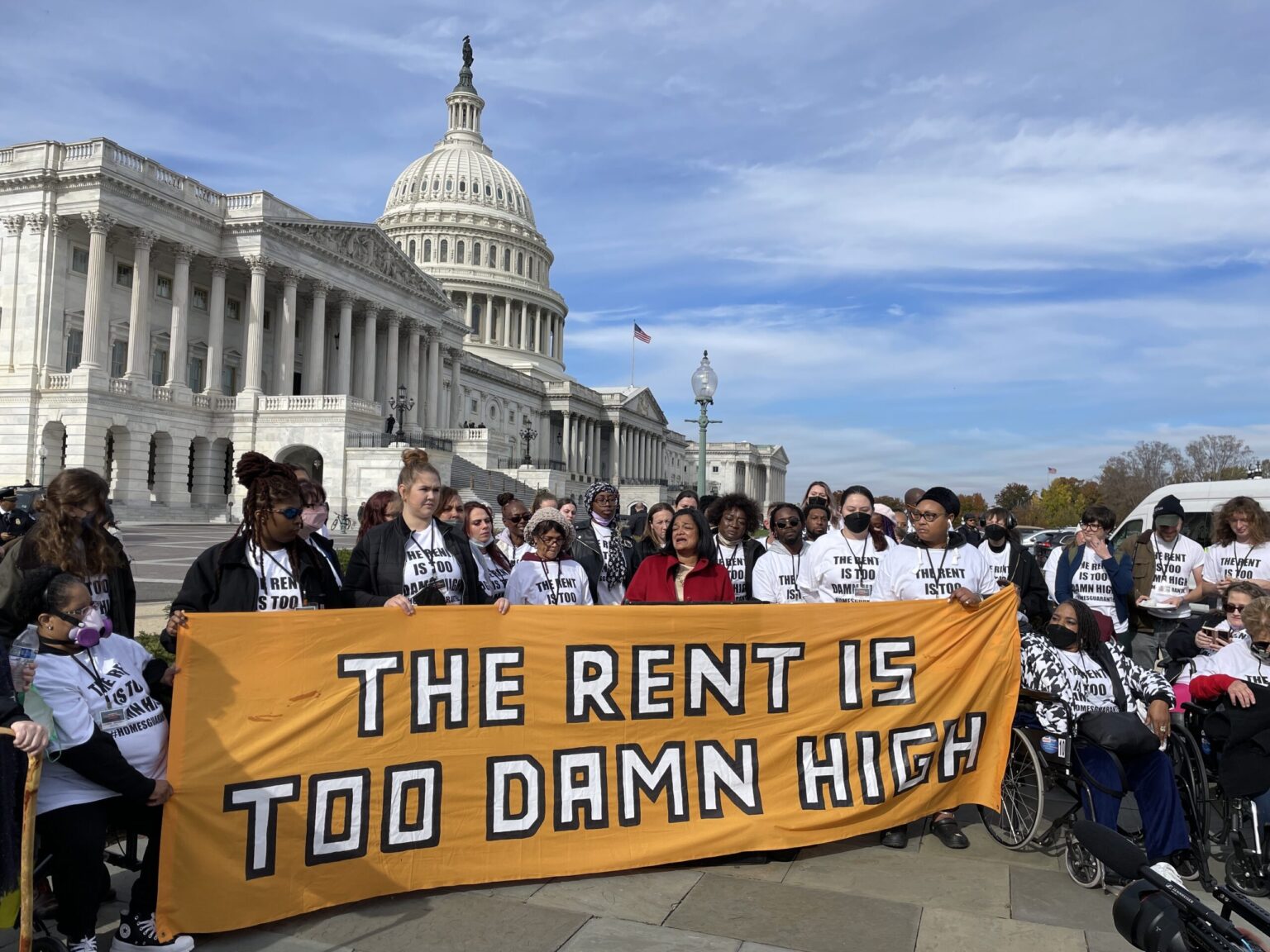
Across the state, tenants rose up to fight against high rents and unsafe and unsanitary living conditions.
In Durham, the city council unanimously approved an amendment to the city’s housing code that prohibits landlords from collecting rent if a housing unit is found to be “imminently dangerous” to tenants’ health and safety.
Under the ordinance, which is modeled after one in Charlotte, landlords can be charged with a misdemeanor if they collect rent on housing that has immediately dangerous conditions such as rotted or damaged structural supports, unsafe wiring, unsafe roofs, no potable water supply or no operating heating equipment in cold months, among other violations.
“The police aren’t gonna go and arrest them [landlords], but if that ends up going to court, the tenant has a very good chance of winning and being able to get not only a portion of their rent back, but all their rent back if the tenant takes the landlord to court,” C.R. Clark, an organizer with the Triangle Tenant Union, said in an interview.
The Triangle Apartment Association pushed back against the ordinance.
“While we understand there may exist some circumstances in which residents experience less than habitable conditions, it is our belief that those circumstances do not involve the greater majority of housing providers,” the association said in a letter to the council.
Brianda Barrera, a Durham renter and Triangle Tenant Union leader, called the ordinance a step toward “justice, health and dignity.”
“It’s for our elderly neighbors living with black mold who are afraid to complain for fear of retaliation from landlords who only view them as an obstacle to profits,” Barrera said. It’s for our undocumented neighbors enduring severe pest infestations because their landlord counts on their silence.”
