
By Jheri Hardaway
Staff Writer
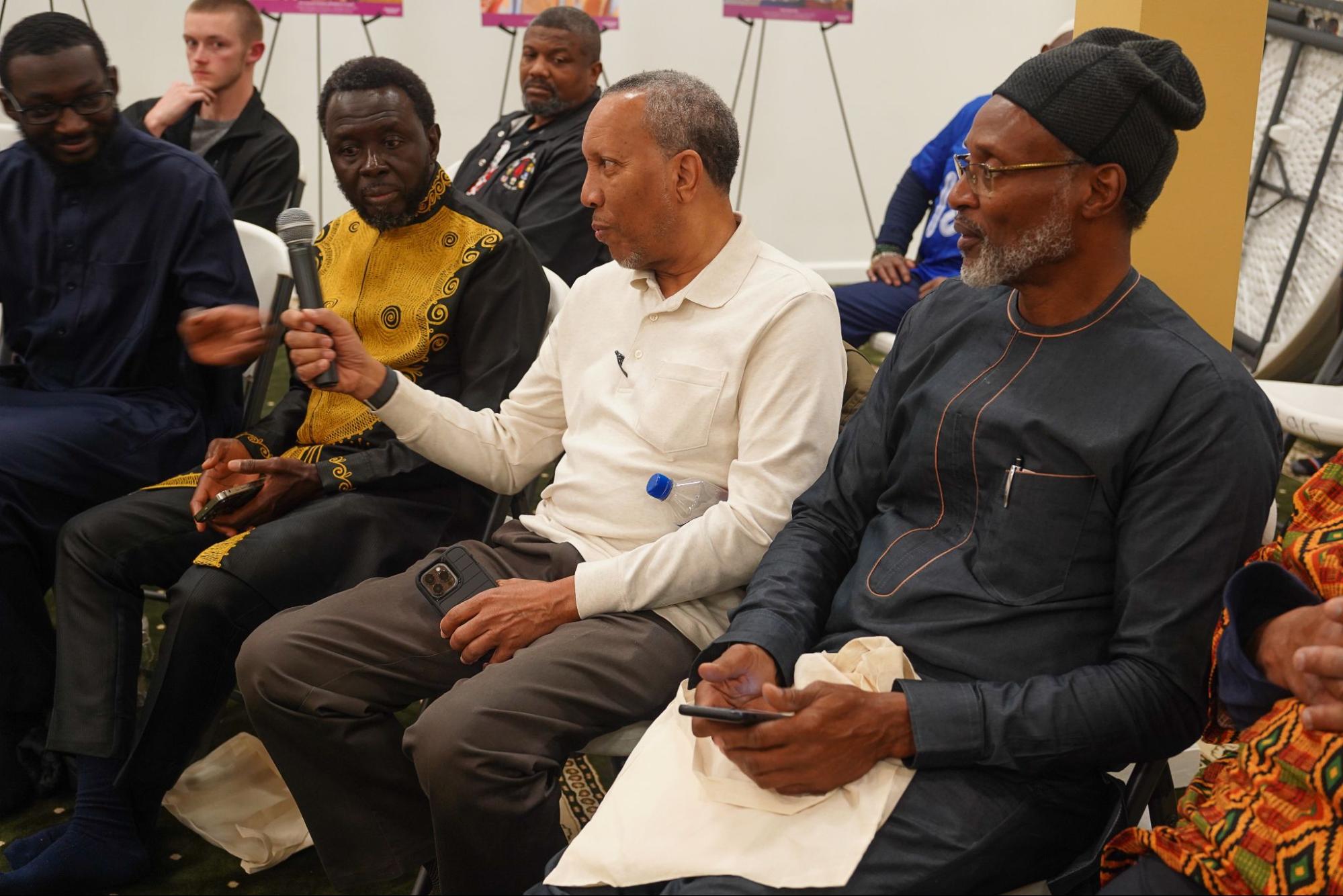
Fayetteville, N.C. - In a gathering defined by deep spiritual reflection and a determined search for historical accuracy, community members, scholars, and historians came together recently to honor the legacy of Omar ibn Said. The event, centered around a communal circle modeled after West African village traditions, focused on the life of Said, a highly educated Muslim scholar from Futa Toro (modern-day Senegal) who was captured at age 37, transported to Charleston in 1807, and enslaved for six decades, eventually living and dying in Fayetteville. Said left behind a powerful written testimony.
The gathering highlighted the ongoing work of the Muslim Wellness Foundation and their Omar ibn Said Institute, an initiative aimed at uncovering, documenting, and ethically commemorating Said’s final resting place in Fayetteville. Founded in 2021, as the first and only institute in the United States dedicated to Black Muslim mental health, wellness and the deep study, preservation, and celebration of the Black Muslim experience—rooted in faith, scholarship, and healing. Organizers emphasized that while official archives are often "closed off and inaccessible," the true history resides within the community and the stories passed down through generations so they are not forgotten. A central theme of the discussion was the necessity of correcting historical narratives that have long obscured Said's brilliance and suffering.
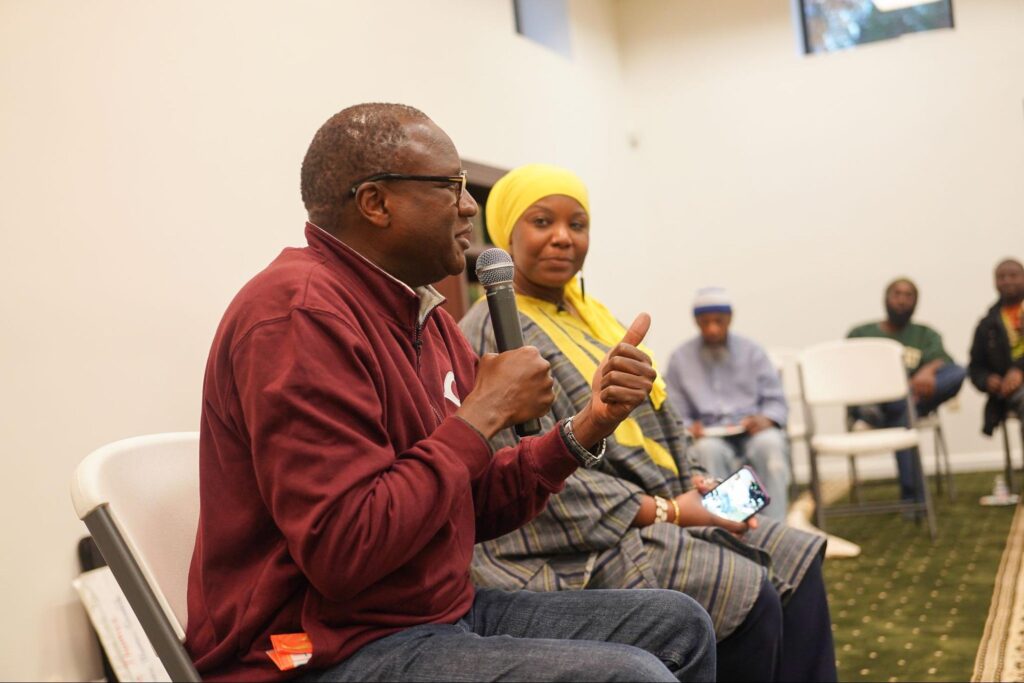
Facilitator and psychologist Dr. Kameelah Mu’Min Oseguera noted that the goal of current research is to "free him from the toxic narratives that still persist." She challenged the historical portrayal of Said as a privileged or "comfortable" slave because he was a scholar. "You can dress it up however you want. You can make a cage comfortable, but it is still a cage," she said, describing Said as a prisoner of a system that tried to extract everything from him every day of his captivity. Dr. Kameelah argued that while Said was never physically free in his lifetime, the community today can free him in their imaginations and stories by rejecting falsehoods.
Dr. Mamarame Seck shared a recent emotional visit to Davidson College to view Said’s Arabic Bible. They noted the notations he made in the margins, still praising God after decades of bondage, testament to a profound psychological fortitude rooted in years of scholarly study before his capture. Dr. Seck, a research collaborator originally from Senegal, detailed the arduous research undertaken since 2020 to confirm Said’s origins, involving on-the-ground tracking in Futa Toro and linguistic analysis by Egyptian experts to decipher Said’s writings, which used Arabic script to write in his native language.
"Now we are opening a new chapter of that research. We want to build connections between people in Futa Toro and here in Fayetteville, because Omar has become a common heritage for both communities," Dr. Seck said. The event featured portraits taken recently in Said’s home village, showing living descendants and a new mosque, bridging the visual gap between the past and present.
The discussion also touched on Said's famous autobiography—the only one written in Arabic by an enslaved person in the United States. Participants noted that although written under coercion, Said subversively began his life story with Surah Al-Mulk (The Sovereignty) from the Quran, an assertion that true power belonged only to God, not his earthly enslavers.
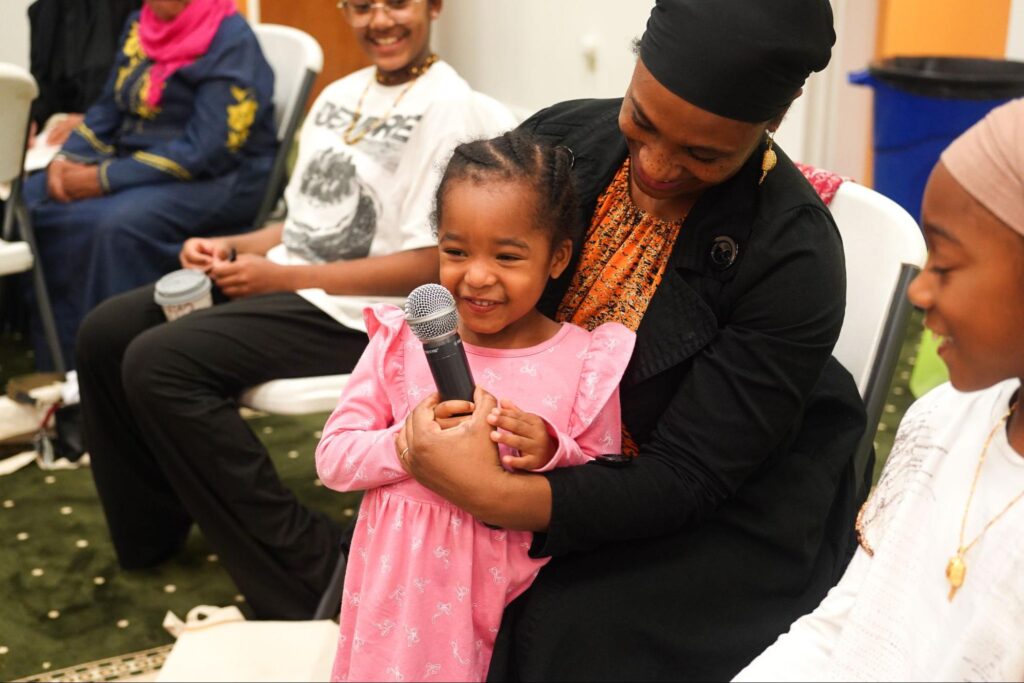
Organizers urged a shift in language when discussing Said, advocating for terms like "captive" rather than "slave," and "enslaver" rather than "master," to accurately reflect the violence of his condition. As the circle closed, participants offered messages to the spirit of Omar ibn Said. The room resonated with phrases like, "We made it back home," "Your legacy is solidified," and "Your suffering has not been in vain." The ultimate message of the gathering was a commitment to ensuring the next generation knows his name.
"We have to be even more diligent and dedicated and determined in preserving the truth about who he is," the facilitator concluded. "He is alive in us."
