
By Jason Sovodki
Special To The Carolinian
“We don’t just serve tea. We serve memory. We serve healing. We serve revolution in ceramic cups.” —Joy Lindsay, Planifolia Plant & Tea Shop
There is something sacred in the soil. Something older than history books and more fragrant than any written recipe. It pulses under bare feet in freshly turned fields, it simmers in mason jars on stovetops, and it whispers through the leaves of every houseplant lovingly hung in shop windows. For Black folks in the South and beyond, the land has never just been land. It’s been archive, altar, inheritance, and insurgency.
This is the root system of Black agrarianism not merely an agricultural identity, but a cultural stance, a spiritual lifeline, and a radical refusal to be disconnected. It is the unbroken tradition of Black farmers and growers tending plots, not only for sustenance, but for sovereignty. And within this tradition, a quieter branch unfurls, Black herbalism, a practice that carries the knowledge of generations who knew how to coax healing from weeds, how to pray with their hands in the dirt, and how to doctor a people when systems refused to.
 In the decades following emancipation, Black communities carved sanctuaries from the hostile terrain of Jim Crow America. From barbershops and beauty salons to juke joints or jook houses, these spaces were more than businesses, they were breathing rooms. Among them stood the quiet strength of the Black tearoom. These tea rooms were elegant and intentional. Often tucked inside boarding houses, community centers, or converted parlors, they offered Black women a dignified space to host, to serve, and to organize. The lace tablecloths and bone china weren’t merely aesthetic; they were armor against the caricatures imposed by white supremacy. Here, Black life was neither spectacle nor subservient. It was sacred.
In these rooms, herbal remedies passed hand to hand like secret code. The mint in the tea was for digestion, yes—but also for calming nerves frayed by daily humiliations. The lemon balm soothed more than the body. It quieted inherited grief. Yes, these were gathering spaces but, also healing grounds.
Our ingredients were the natural world around us even when that world was imposed upon us. Dandelion sprouted from field edges, between fence posts, along the forgotten tree lines, and we gathered it anyway turning what was overlooked into tea, into wine, into healing. Even when the plants were pressed by oppression, they found their way into our medicine cabinets like stubborn hope. And cotton was no exception. It too moved from burden to balm, from symbol of subjugation to tool of restoration.
Before it was empire’s crop, before it blanketed plantations and broke the spines of stolen labor, cotton was kin. A native plant to Africa, held communally by hands that saw it not as capital but as care. It clothed us. We spun it not just for markets, but for mothers, for ceremonies, for the everyday dignity of being seen.
But the soil remembers what was done.
Cotton was turned against us. Under enslavement, it became the measuring stick of profit and pain. Black hands picked it raw, bled into it, built a nation on it. And still—still—our people reached into the same dirt and found medicine.
Because Black folks, enslaved and once enslaved, took a native plant turned toward oppression and turned it into medicine.
Cotton, root, seed, and bark. A whisper of remedy hidden in the husk of suffering. It was steeped into teas to regulate menstrual cycles, to soothe inflammation, to ease the ache that came from bodies working beyond exhaustion. It held antioxidant, anti-inflammatory, analgesic, diuretic, even cytotoxic power making it one of the most quietly potent healers in the field.
Women knew this. Midwives knew this. They passed it along in hushes and hums, in the pressed hands of daughters and granddaughters. The cotton fields, once sites of domination, became repositories of ancestral wisdom. Where masters saw industry, we saw pharmacopeia. Where history tried to wound us, we made salve.
They walked between rows of sorrow and made tinctures of defiance. What was meant to kill them became what helped them live. What tried to erase their lineage became what protected it. What grew from pain grew into power.
And so cotton remains. Not as a symbol of defeat, but of reclamation.
Despite a road paved for the destruction of a people these places are still transplanted throughout our communities. Walk into Planifolia Plant & Tea Shop in Rocky Mount, North Carolina, and you are not just entering a retail space. You’re stepping into a living altar. A convergence of earth and intention. A sacred pause in the current of time where history is steeped, not shelved.
As co-owner and operator, Joy Lindsay once said, “We don’t just serve tea. We serve memory. We serve healing. We serve revolution in ceramic cups.”
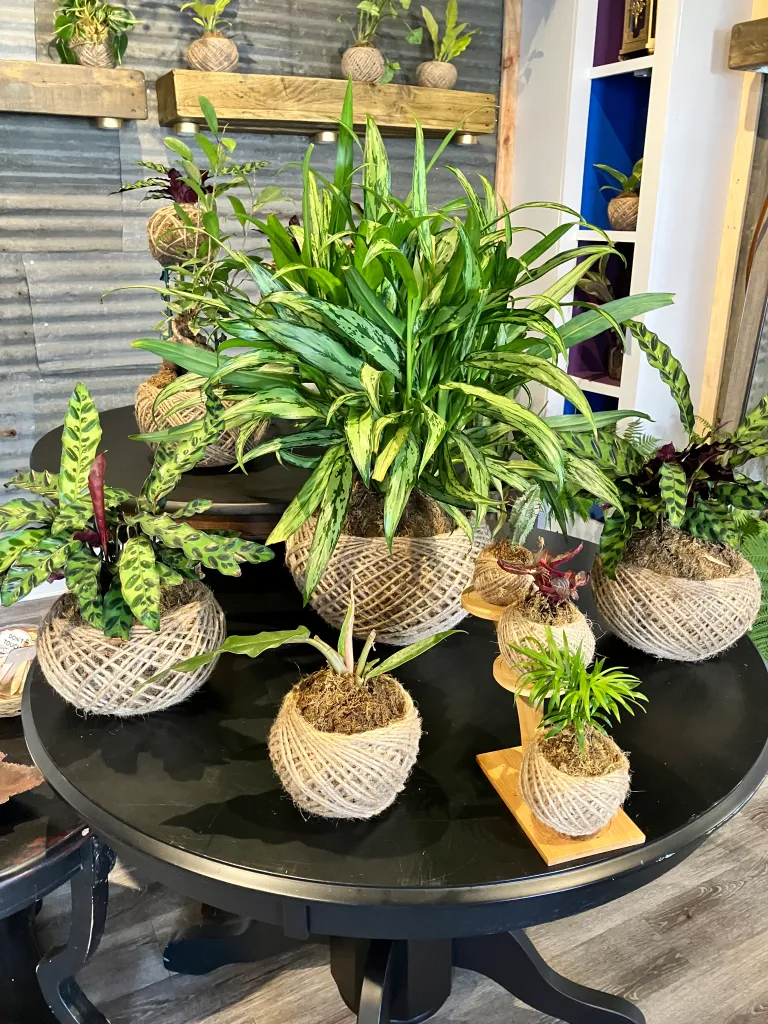
And it’s true. Here, the air hums with chlorophyll and possibility. Plants dangle like ancestral blessings—kokedamas wrapped in jute twine, suspended like prayers over soil-swept mossy altars. The lighting is low and tender, like dusk after rain. Herbs rest in apothecary jars like old stories waiting to be told again. Every sip is a ritual. Every blend is a remembering.
Planifolia is more than a tea shop, it is an extension of Grounded Roots Farms, the fertile land from which it blooms. Together, they form a living connection between Black Agrarianism, Black Herbalism, and the Black Tea Room. The farm feeds the shop. The shop nourishes the people. The people carry the tradition forward.
Infusions like Roseberry Bliss and Amber Glow do more than please the palate—they offer communion with the dirt, the grandmother who grew mint behind her shotgun house, the child who learned to listen to plants before they could pronounce their names. These teas do not just taste like fruit and fire, they taste like lineage.
Children grow up here learning not only how to sip tea, but how to tend it. How to hold soil like it holds memory. How to recognize the patience of roots. They mix soil the way elders used to mix poultices—slow, reverent, precise. Workshops on terrariums, seed-saving, and moss-wrapping aren’t just lessons; they’re acts of cultural recovery. They’re the handing down of what was almost lost.
This is not retail. This is ritual.
Planifolia doesn’t exist outside of history. It is stitched from it. It is the soft echo of Black tea rooms, the whispered wisdom of Black herbalists, and the unshakable root of Black agrarians who believed land could be both livelihood and liberation.
It doesn’t just bloom in spite of what came before, it blooms because of it.
What happens when Black agrarianism, Black herbalism, and Black tea culture converge?
You get a place that feels like both sanctuary and schoolhouse. You get healing that tastes like hibiscus and memory. You get a table where elders sit beside children, where plants teach patience, and where a cup of tea becomes a communion.
The tea room, then and now, has always been a space of quiet revolution. A place where beauty becomes resistance. Where healing is brewed daily. And where the land is never far from the conversation.
At places like Planifolia this tradition continues—one leaf, one lesson, one lovingly poured cup at a time.
